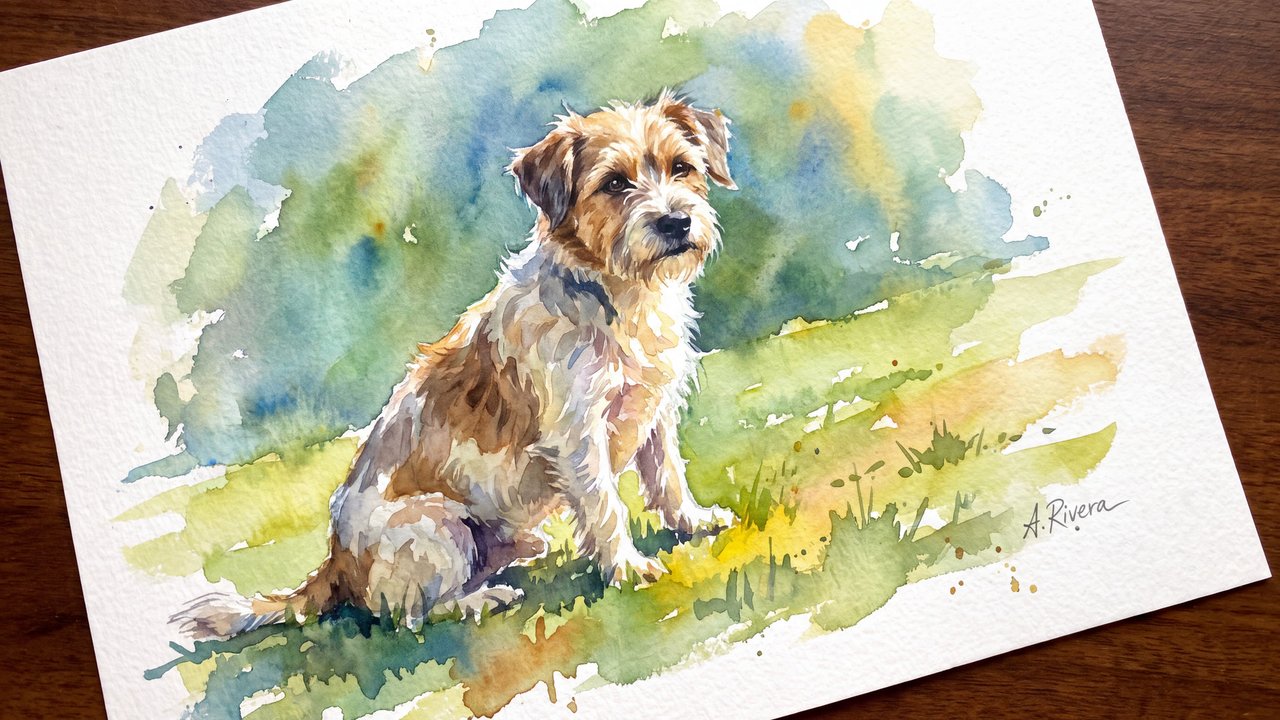
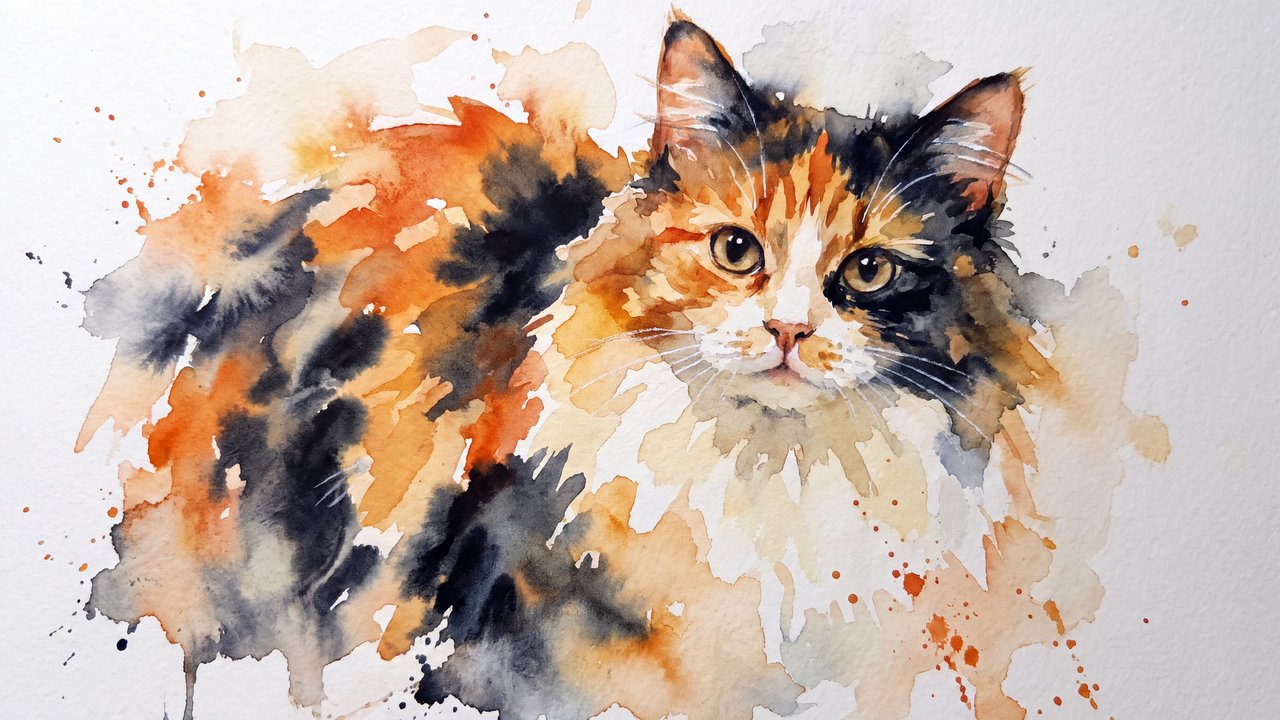
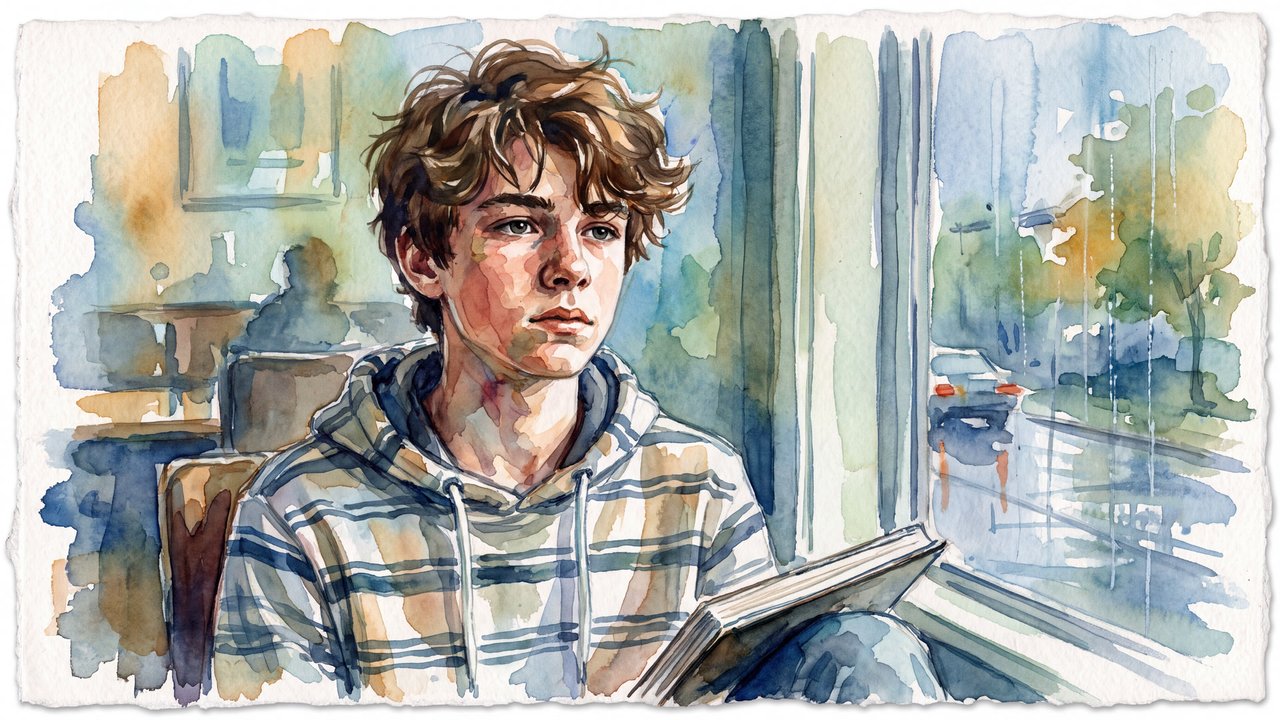
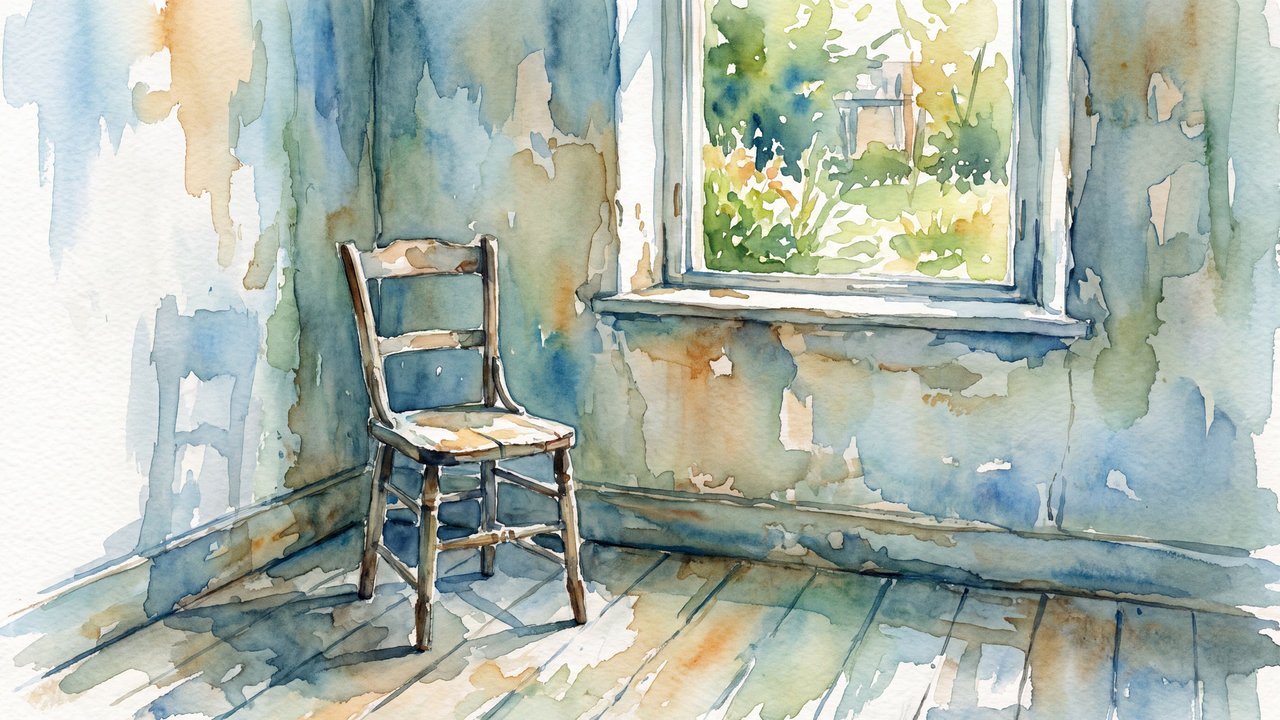
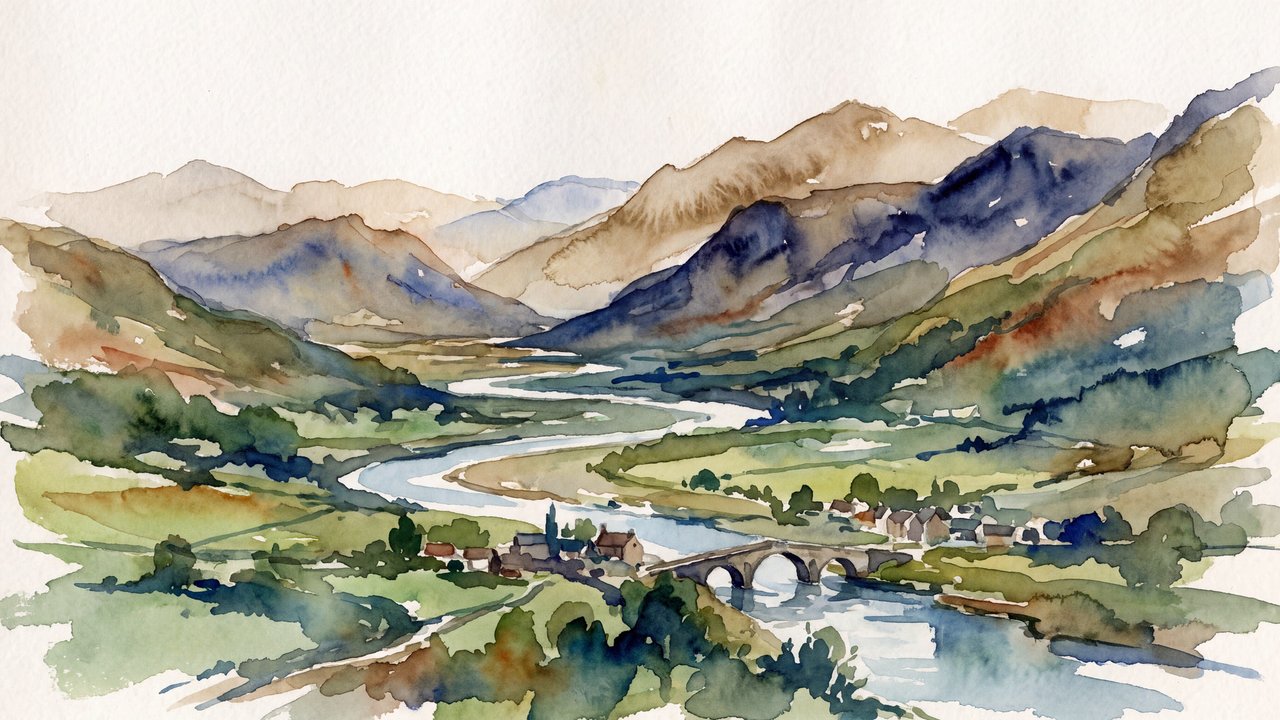
A paint that uses pigment in an aqueous medium, generally diluted with water and used for translucent color layers that can preserve the brightness of the support.
Both languages share the English example images. Japanese prompts are the recorded translations.
A phrase to start with
Directs the image toward watercolor-paint color layers and water-mediated edges.
Appearance and effects
Typical cues include water-adjustable color layers, support brightness showing through, fluid edges, and overlaps, with substantial variation from formulation and application.
Visual traits
Transparent to translucent color layers
Brightness derived from the white support
Soft edges, blooms, and color overlaps influenced by water amount
Possible pigment settling and visible paper texture
Expected changes
Color areas are more likely to appear as overlapping transparent or translucent layers
Blooms and tonal variation become more likely than uniformly hard digital edges
The image is more likely to suggest support brightness or paper texture
Watercolor paint is a coloring material made from ground pigment combined with water and generally a water-soluble binder such as gum arabic, distinct from watercolor painting as a whole-work medium and from wash as an application technique.
In more detail
Watercolor paint is a coloring material that can be diluted or reactivated with water and applied to supports such as paper. It is typically associated with transparent or translucent layers, blooms, color overlaps, and use of the support's brightness, but pigment, formulation, concentration, paper, and application can shift the result toward greater opacity. It is therefore not defined as invariably pale or transparent. Gouache paint, poster color, watercolor painting as a medium, and techniques such as wash or glazing remain separate concepts.
Includes
Watercolor paint or coloring material itself, used by dilution with water
Watercolor formulations based on pigment and generally a water-soluble binder such as gum arabic
Excludes
Watercolor painting as a whole-work medium or genre
Application techniques such as wash, wet-on-wet, or glazing
Treating gouache, poster color, or acrylic paint as identical to watercolor paint
What this does not imply
Any particular subject, era, region, artist, or composition
An invariably pale, muted, realistic, or abstract result
A specific technique such as wash or the opacity associated with gouache
Variability
Transparency, granulation, edges, and paper texture vary with pigment, formulation, water amount, support, technique, and generation model, so they do not form one fixed look.
Usage and adjustments
Usage
Use the atomic expression as a material modifier without adding subject or composition
Use the diagnostic expression only when transparency and edge behavior need emphasis
Distinguish similar expressions
Choose the whole-work medium entry when specifying watercolor painting rather than the paint material
Distinguish this material from opaque water-based paints such as gouache or poster color
Typical uses
Add watercolor-paint material character to an illustration or painting
Combine with watercolor techniques to control transparent layers or blooms
Possible failure modes
Adding paper texture without watercolor-like color layers or water behavior
Mistaking uniformly pale color for watercolor expression
Fixing the result to fully opaque gouache-like coverage
A more descriptive expression
The exact full prompt for these supplemental images is not supplied. This is not a same-seed experiment.
VWR
Image unavailable
The explanation and prompt are still available.
Medium-sized dog
Read a practical prompt
Botanical study with transparent layering
A text example without an associated image
A practical prompt that does not attribute the whole result to the medium alone; transparent layering, paper, and negative space are specified separately to show botanical form and overlapping color.
Subject A botanical study of a single eucalyptus branch
Specifies the subject and study-like use; this is not an effect of watercolor paint itself.
Material painted with watercolor paint
Specifies the central material. This phrase alone does not determine transparency, blooms, or paper grain. Watercolor paint ↗
Support cold-pressed watercolor paper
Specifies paper surface as a factor separate from the watercolor paint itself.
Technique build the leaves with several transparent washes and use fine dry-brush lines on the stems
Explicitly requests application methods for translucent layering and fine lines instead of inferring them from the medium name.
Color Natural small shifts of green and blue-green
Specifies the botanical color range; these colors are not implied by watercolor paint itself.
Appearance highlights preserved as unpainted paper
Requests highlights that show the support itself; this result is not guaranteed by naming the medium alone.
Composition place the branch diagonally across the frame with generous surrounding negative space
Specifies page placement and preserves space suitable for a Web example card.
Constraint no text, border, or decorative background
Suppresses unrelated output elements so the plant and material treatment remain easy to inspect.