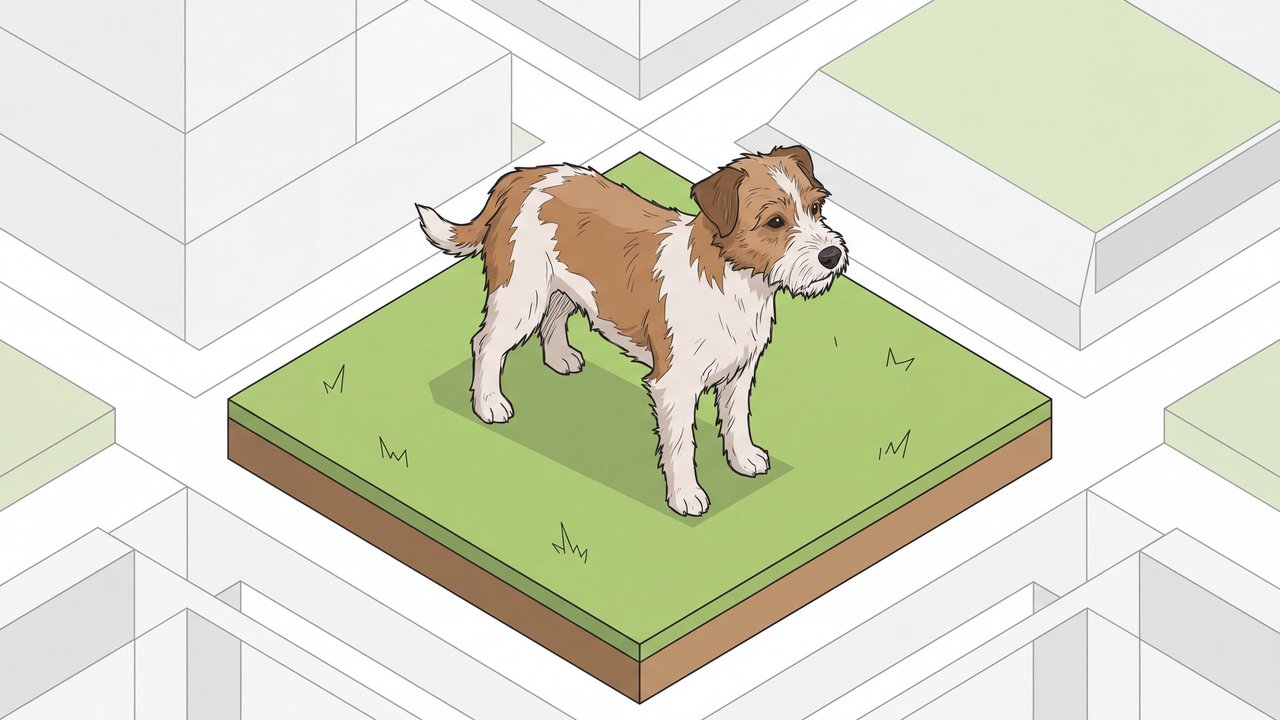


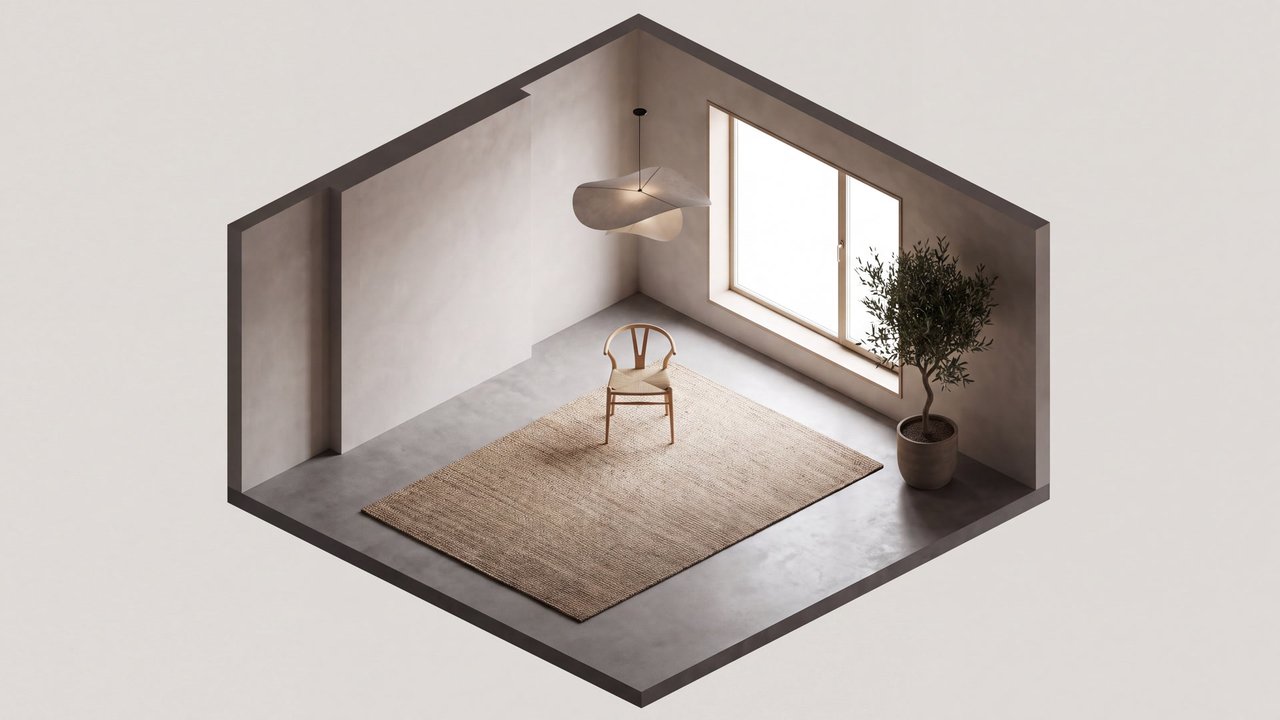


Medium-sized dog
Concept
Aerial perspective
A depth treatment that makes distant forms paler, cooler, and less distinct.
Compare ↗Concept / Isometric projection
A projection with parallel lines and equal axis scale
A projection that keeps parallel lines while showing three axes at equal angles.

Medium-sized dog
Both languages share the English example images. Japanese prompts are the recorded translations.
Constructs space with isometric projection rather than vanishing-point convergence.
Parallel edges do not converge and several faces appear at equal scale.
It constructs objects and space with equally scaled axes rather than converging depth to a vanishing point. It differs from an oblique photo view and one-point perspective.
It makes several faces of buildings, rooms, machines, or terrain visible at once. Viewpoint, subject, and medium remain separately selectable.
Axis orientation can vary with composition.
Content updated:
Items linked through explicit membership in the same theme.
Medium-sized dog
Concept
A depth treatment that makes distant forms paler, cooler, and less distinct.
Compare ↗
Medium-sized dog
Concept
A composition that balances off-center elements through visual weight.
Compare ↗
Medium-sized dog
Concept
A composition that places the main subject on the image's central axis for focus and stability.
Compare ↗