


Concept / Fantasy narrative
Fantasy narrative
A narrative framework for a world or event that includes beings or occurrences beyond ordinary real-world laws
A narrative framework for a world or event that includes beings or occurrences beyond ordinary real-world laws.

An ordinary open landscape
The fixed valley landscape contains no narrative world or event beyond ordinary reality, so it is replaced with an ordinary neutral landscape for comparison. The replacement itself does not pre-stage fantasy.
Both languages share the English example images. Japanese prompts are the recorded translations.
A phrase to start with
Directs the scene toward a narrative framework that includes beings or occurrences beyond ordinary real-world laws.
Appearance and effects
The scene can read as a narrative world that includes beings or occurrences beyond ordinary real-world laws.
Visual traits
- narrative world
- beings or events beyond ordinary reality
- framework without a specified tradition
Expected changes
- The result is more likely to read as a narrative world that can include beings or occurrences beyond ordinary real-world laws
Five examples
1 — One neutral person in an ordinary field
The fixed dog is a single animal subject and cannot compare a narrative world or event beyond ordinary reality, so it is replaced with a neutral person and setting that do not pre-stage fantasy.
One neutral person standing quietly in an ordinary field with no indicated costume, action, or narrative role.
- One neutral person with no indicated narrative role.
- An ordinary field.
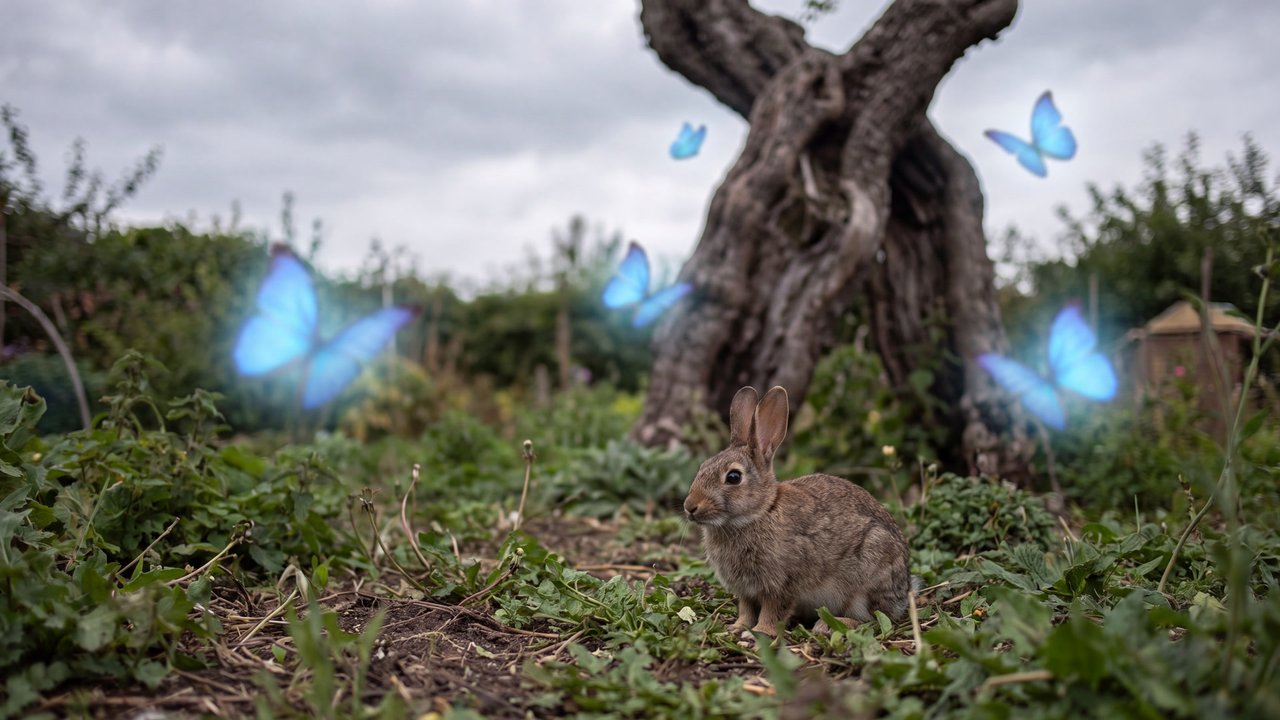
2 — A neutral animal in an ordinary garden
The fixed cat is a single animal subject and cannot compare a narrative world or event beyond ordinary reality, so it is replaced with a neutral animal and setting that do not pre-stage fantasy.
A neutral animal in an ordinary garden with no indicated action, clothing, cultural symbols, or narrative role.
- A neutral animal with no indicated narrative role.
- An ordinary garden.
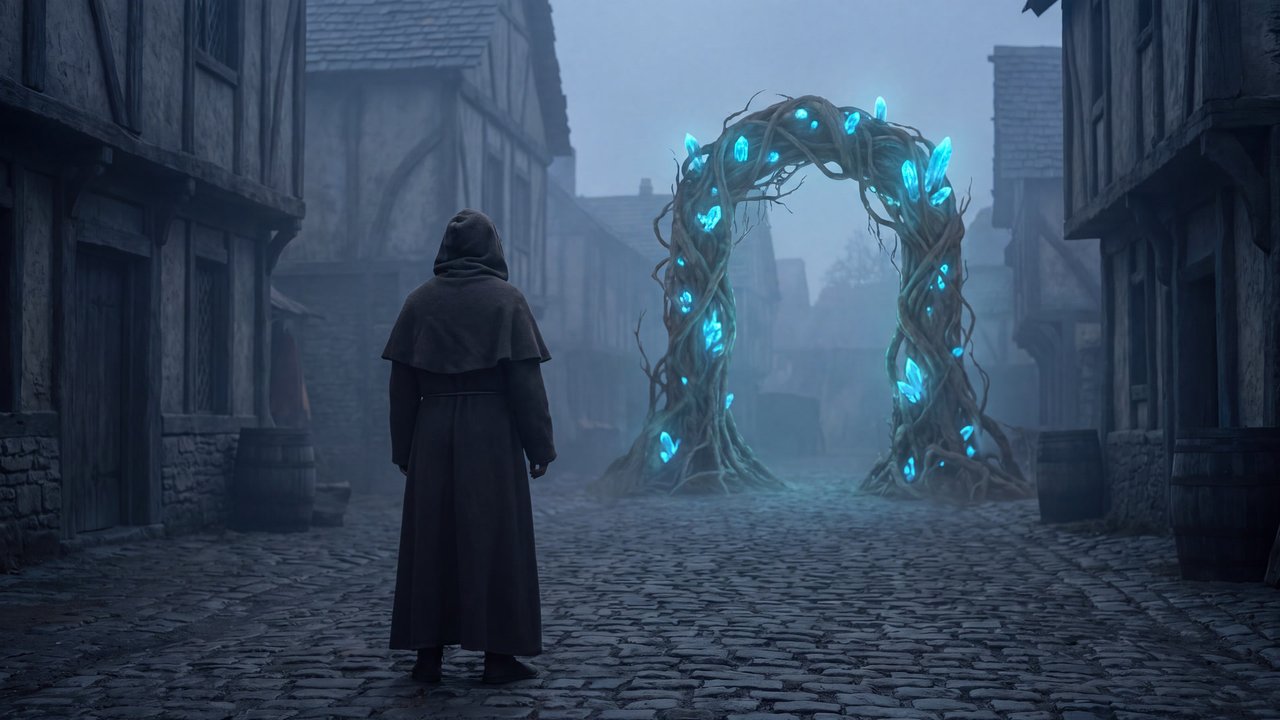
3 — One neutral person on a quiet street
The fixed boy determines an age and subject category and cannot neutrally compare a narrative world or event beyond ordinary reality, so it is replaced with a neutral person and setting that do not pre-stage fantasy.
One neutral person standing on a quiet street with no indicated age, costume, action, or narrative role.
- One neutral person with no indicated narrative role.
- A quiet street.
4 — An ordinary unoccupied room
The fixed unoccupied room contains no narrative world or event beyond ordinary reality, so it is replaced with an ordinary neutral room for comparison. The replacement itself does not pre-stage fantasy.
An ordinary bright unoccupied room with no indicated special event, narrative role, or cultural symbols.
- An ordinary bright unoccupied room.
- A state with no indicated special event or narrative role.
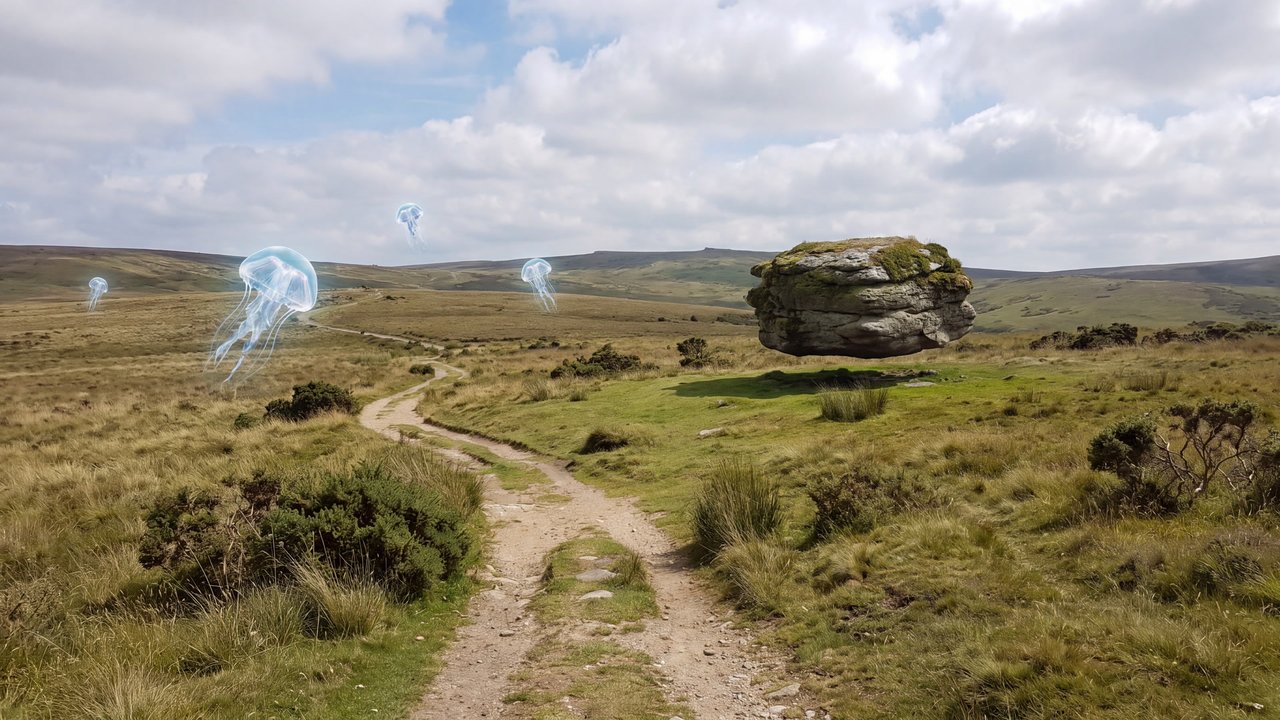
5 — An ordinary open landscape
The fixed valley landscape contains no narrative world or event beyond ordinary reality, so it is replaced with an ordinary neutral landscape for comparison. The replacement itself does not pre-stage fantasy.
An ordinary open landscape with no indicated special event, narrative role, or cultural symbols.
- An ordinary open landscape.
- A state with no indicated special event or narrative role.
Meaning and scope
Definition
Fantasy narrative is a narrative framework for a world or event that includes beings or occurrences beyond ordinary real-world laws. It does not determine a particular mythology, religion, culture, magic system, medieval setting, morality, species, or ending.
In more detail
It concerns narrative framing that includes beings or events not explained solely by ordinary real-world laws. It may include an imagined world, a supernatural occurrence, or an unknown being, but this broad framework does not represent a particular tradition, belief, or community, or determine a magic system, narrative conflict, or outcome.
Includes
- A narrative framework for a world or event that includes beings or occurrences beyond ordinary real-world laws
Excludes
- A particular mythology, religion, culture, magic system, medieval setting, morality, species, or ending
- Representation of a particular tradition, belief, or community
What this does not imply
- A particular mythology, religion, culture, magic system, medieval setting, morality, species, or ending
Variability
The kind of being or event, setting, time period, characters, and narrative development can be adjusted separately.
Usage and adjustments
Usage
- Specify only a narrative framework beyond ordinary real-world laws without adding a particular tradition or magic system
Distinguish similar expressions
- Specify a particular mythology, religion, culture, magic system, or ending separately only when needed
Typical uses
- Compose a narrative scene that includes beings or occurrences beyond ordinary real-world laws
Possible failure modes
- The result is fixed to a particular religion, culture, or mythology without support
- A magic system or moral conflict is added automatically
- The scene does not read as a narrative beyond ordinary reality
Content updated:
From the same theme
Items linked through explicit membership in the same theme.


A neutral stone against a plain background
Concept
Celebration theme
A narrative theme centered on sharing joy or an achievement through celebration.
Compare ↗