
Concept / Comics and graphic narrative
Comics and graphic narrative
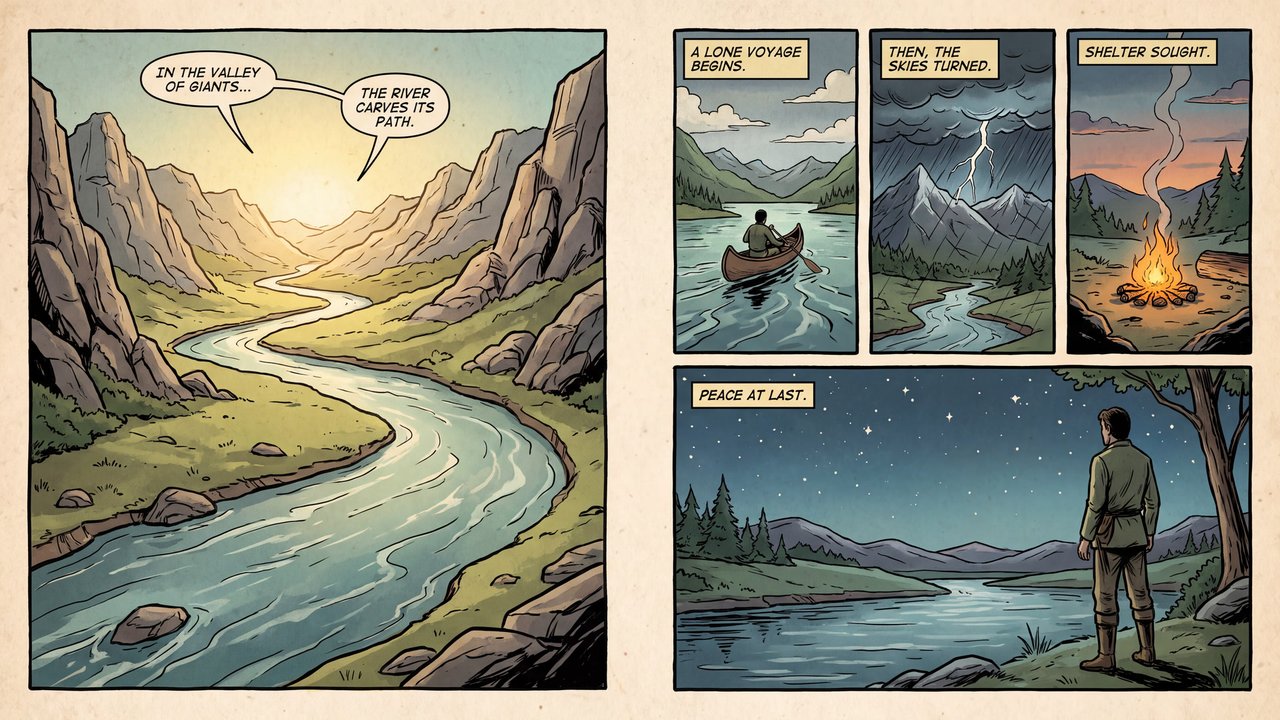
Visual storytelling that uses a sequence of panels and images to convey events
Visual storytelling that uses a sequence of panels and images to convey events.

Valley with a river and mountain ranges
Both languages share the English example images. Japanese prompts are the recorded translations.
A phrase to start with
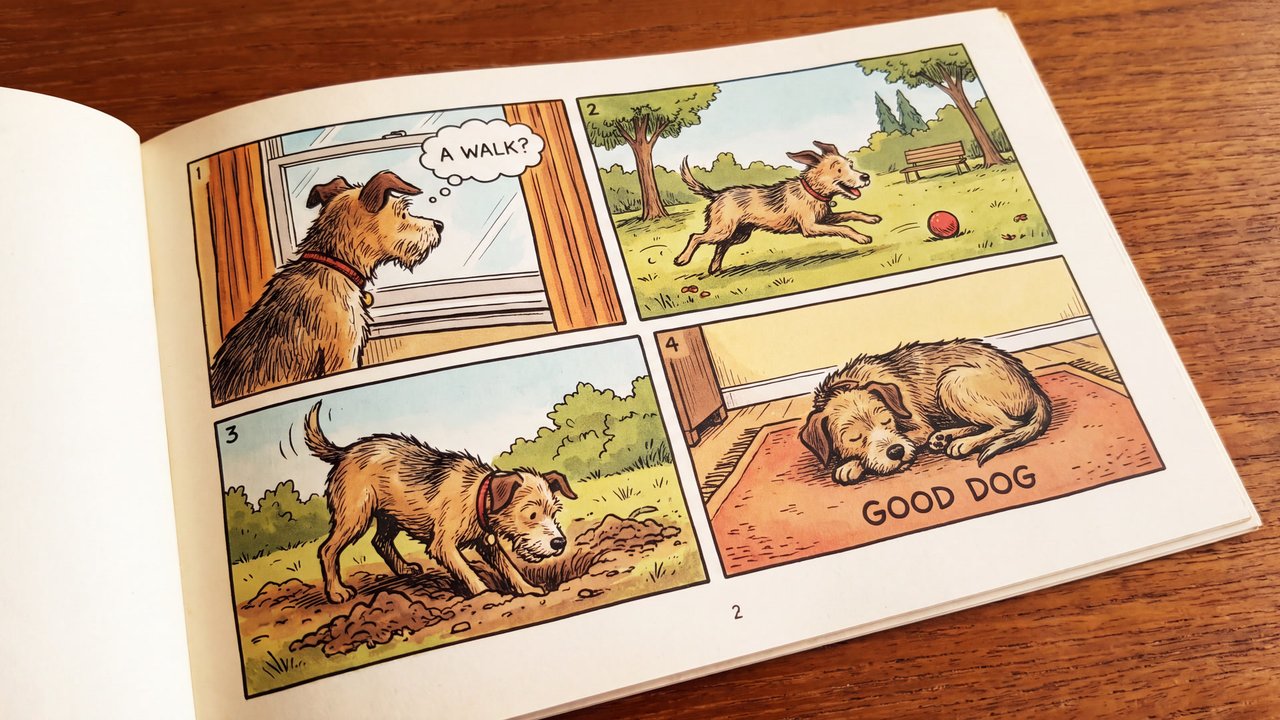
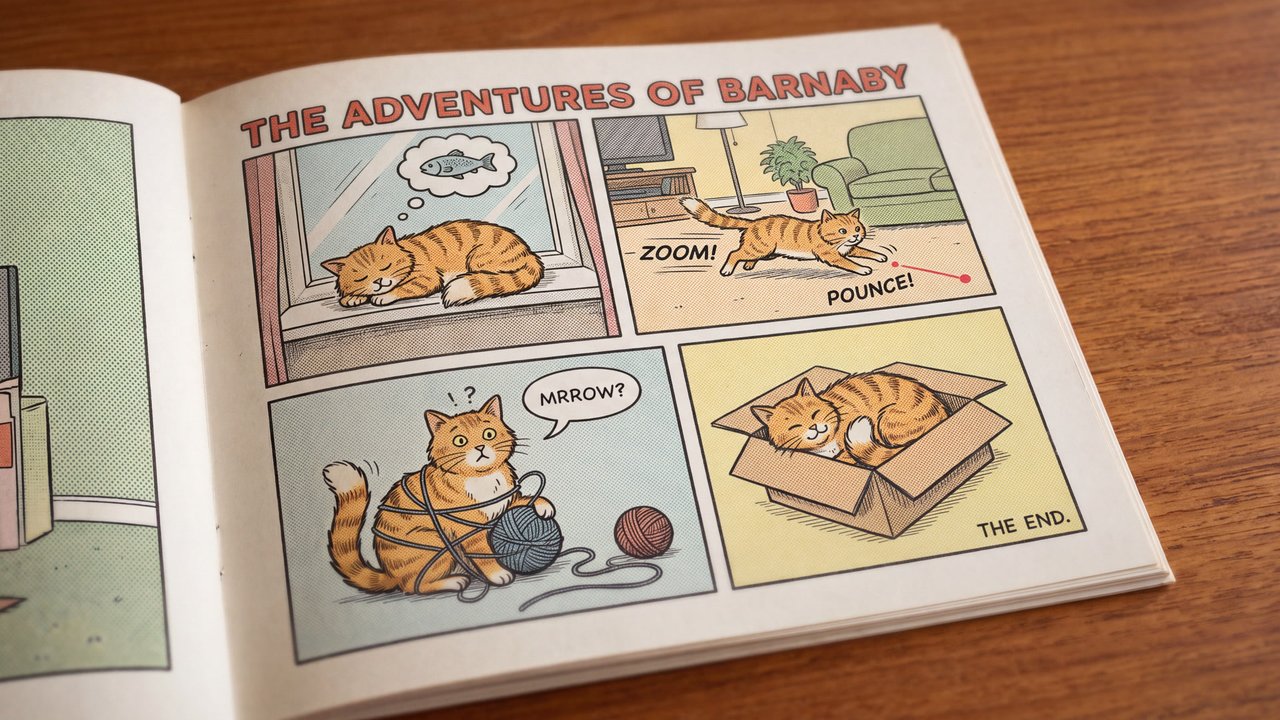
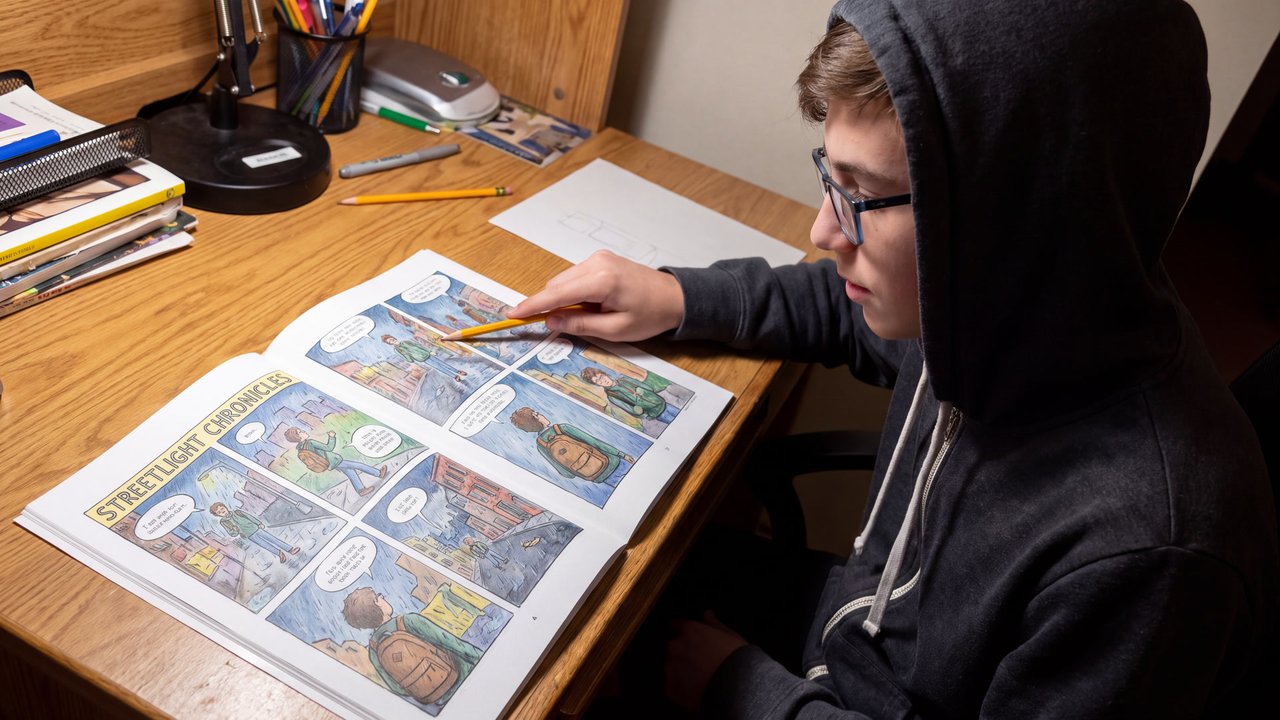
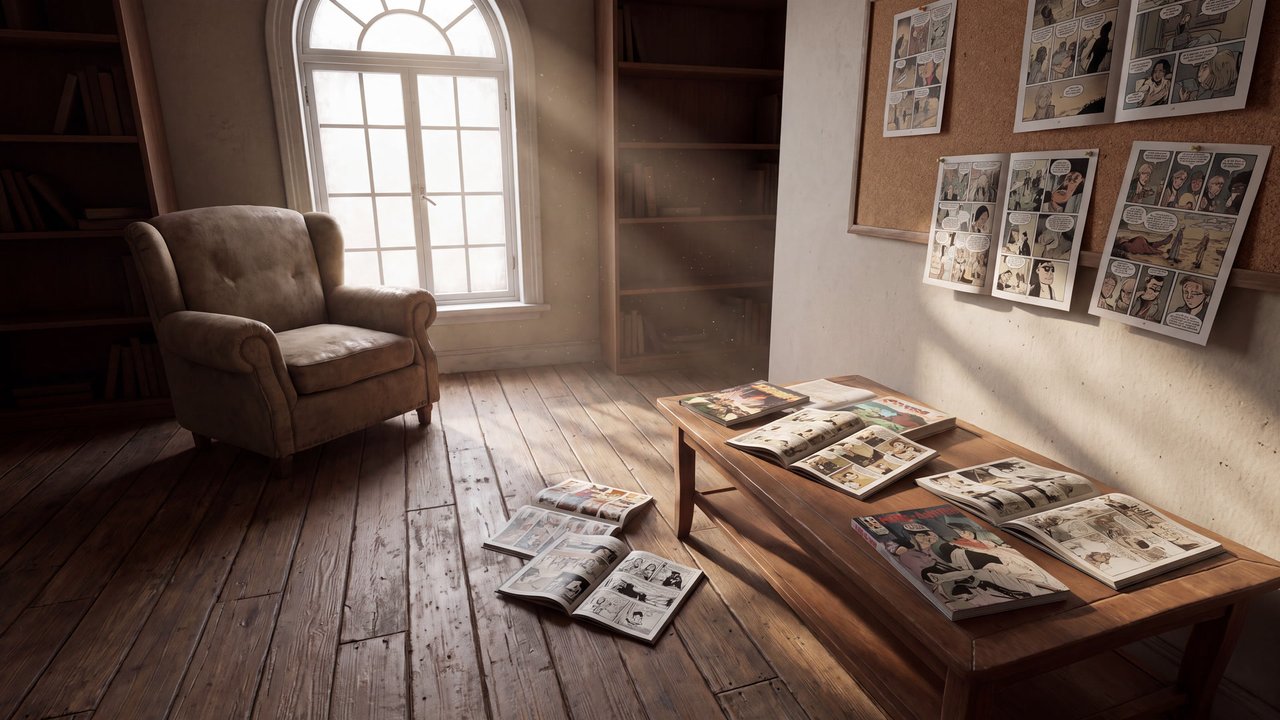
Arranges scenes as a sequence of panels so the course of events can be read.
Appearance and effects
Separated panels and linked scenes show a flow of time or events.
Visual traits
- separated panels
- linked scenes
- reading flow
Expected changes
- Panel divisions are more likely to appear
- Changes between scenes are more likely to be legible
Five examples
1 — Medium-sized dog
Open image ↗2 — Cat
Open image ↗3 — Teenage boy
Open image ↗4 — Unoccupied interior
Open image ↗5 — Valley with a river and mountain ranges
Open image ↗Meaning and scope
Definition
Comics and graphic narrative use a sequence of panels, scenes, or images to show events or passage through time. They do not determine a particular work, character, audience, print format, or regional style.
In more detail
Panel transitions, reading flow, and repeated people or scenes create a continuous reading beyond a single image. Line work, color, medium, and the presence of dialogue can be specified separately.
Includes
- Images that show events through a sequence of panels
- Graphic narratives read through changing scenes
Excludes
- General illustration completed as one image
- Recreation of a named existing work or character
- Specification of a print format or audience
What this does not imply
- A named work
- creator
- character
- or regional style
- Dialogue
- print format
- or intended audience
Variability
Panel count and spacing can adjust the pace of time and reading.
Usage and adjustments
Usage
- Make event order and panel reading order clear
- Do not specify a named work or character
Distinguish similar expressions
- Use illustration when only one finished image is wanted
Typical uses
- Show a short event through consecutive scenes
- Organize movement or time changes with panels
Possible failure modes
- Panel order cannot be read
- Too many scenes obscure the main event
Content updated:
From the same theme
Items linked through explicit membership in the same theme.

Sitter against a natural setting
Concept
Portraiture
An image-work genre centered on the presence, expression, and pose of one person, a small group, or an animal.
Compare ↗
Cat
Concept
Anime Visual Style
A visual language combining line, shape, color, and staging conventions associated with anime.
Compare ↗