
Concept / Comic-book Visual Style
Comic-book Visual Style
A visual style that makes a scene readable through sequential-panel conventions and print-like lines or halftone texture
A visual style informed by sequential panels and print-like lines or halftone texture.

Cat
Both languages share the English example images. Japanese prompts are the recorded translations.
A phrase to start with
Adds sequential-art-minded linework and print-like texture.
Appearance and effects
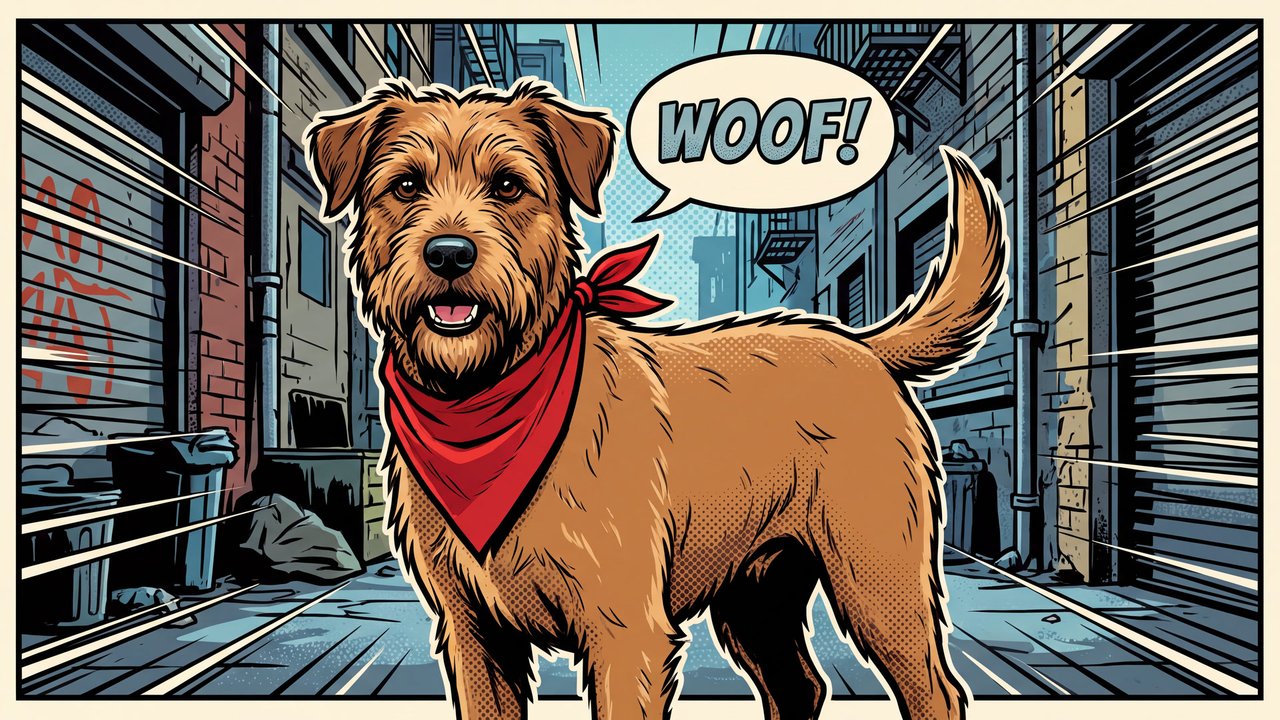
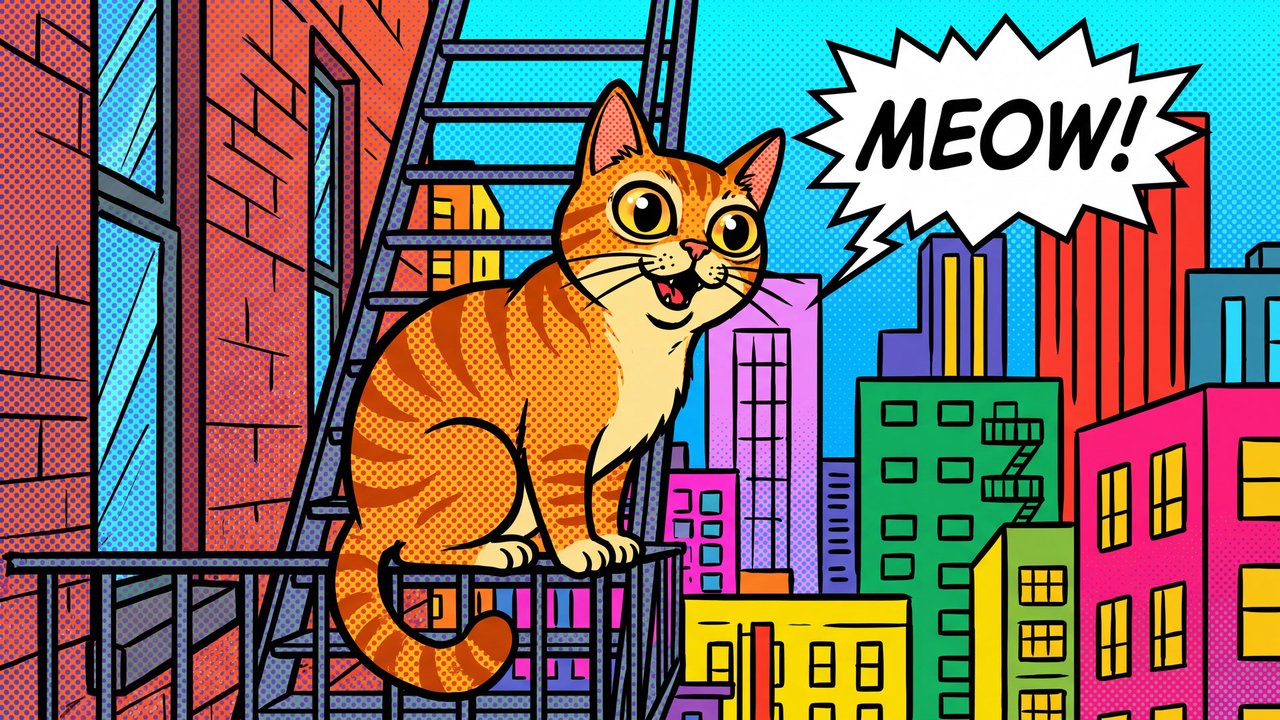
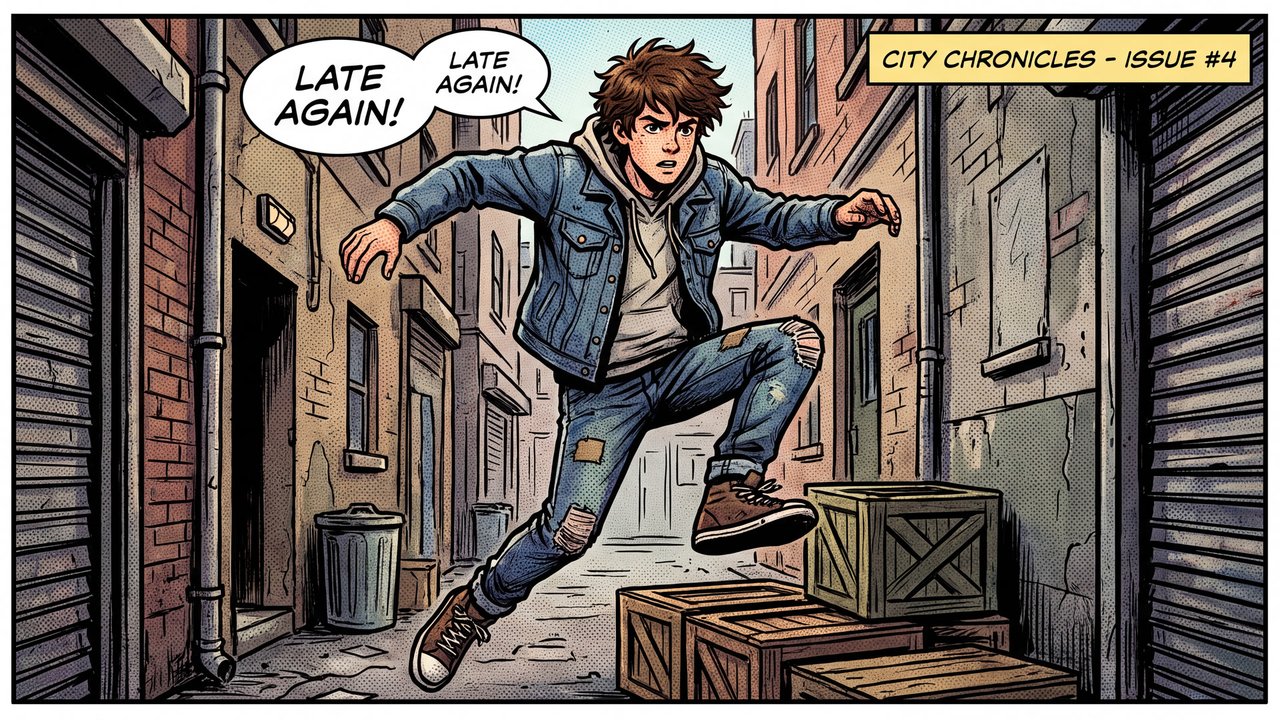
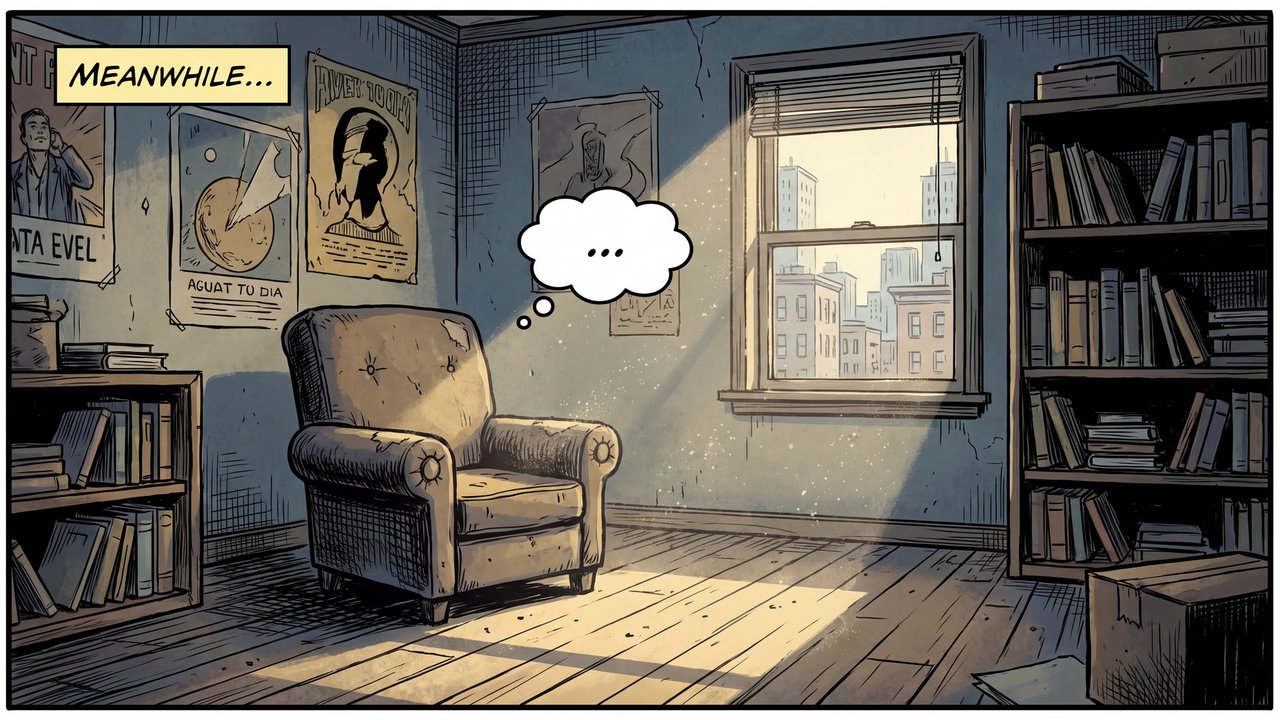
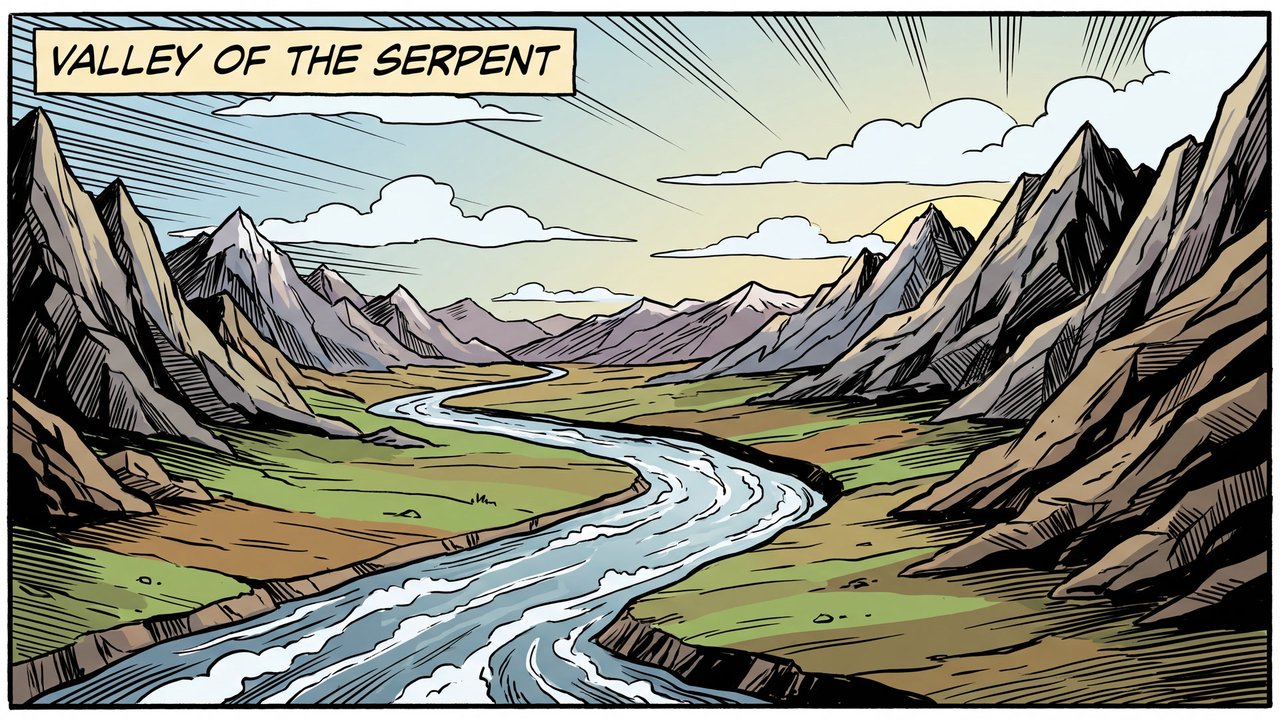
Contours, tonal masses, halftone texture, and panel divisions guide how a scene is read.
Visual traits
- clear contour lines
- solid blacks and halftones
- panel divisions
Expected changes
- Contours and tonal masses are more likely to become clear
- Halftones or panel borders are more likely to appear
Five examples
1 — Medium-sized dog
Open image ↗2 — Cat
Open image ↗3 — Teenage boy
Open image ↗4 — Unoccupied interior
Open image ↗5 — Valley with a river and mountain ranges
Open image ↗Meaning and scope
Definition
Comic-book visual style uses conventions such as panel structure, contour lines, solid blacks, and halftone texture to make scenes readable. It does not determine a particular publisher, work, character, narrative, or production method.
In more detail
For a single image, panel borders and a printed feel can be chosen as visual cues. Subject, audience, narrative content, and publication format remain separate choices.
Includes
- Readable imagery using panels
- contour lines
- solid blacks
- or halftone texture
Excludes
- A particular publisher
- work
- character
- page format
- or printing process
What this does not imply
- A particular work
- publisher
- audience
- narrative
- or printing process
Variability
Because the provisional reference is not direct evidence for this candidate, root source review is required, including for the amount of paneling and halftone texture.
Usage and adjustments
Usage
- Specify only linework
- halftones
- and panel-like appearance
- Specify narrative and text content separately
Distinguish similar expressions
- Distinguish it from manga generally and imitation of a particular work; do not use proper names
Typical uses
- Make a scene readable with contours and tonal masses
- Add a print-like comic texture
Possible failure modes
- The image becomes generic line art
- Unwanted text is introduced
Content updated:
From the same theme
Items linked through explicit membership in the same theme.

Sitter against a natural setting
Concept
Portraiture
An image-work genre centered on the presence, expression, and pose of one person, a small group, or an animal.
Compare ↗
Cat
Concept
Anime Visual Style
A visual language combining line, shape, color, and staging conventions associated with anime.
Compare ↗