
Cat
Concept
Mughal miniature painting
A historical courtly tradition of finely detailed painting.
Compare ↗Concept / Wixárika visual traditions
Visual expression connected to particular communities, places of making, works, makers, and uses
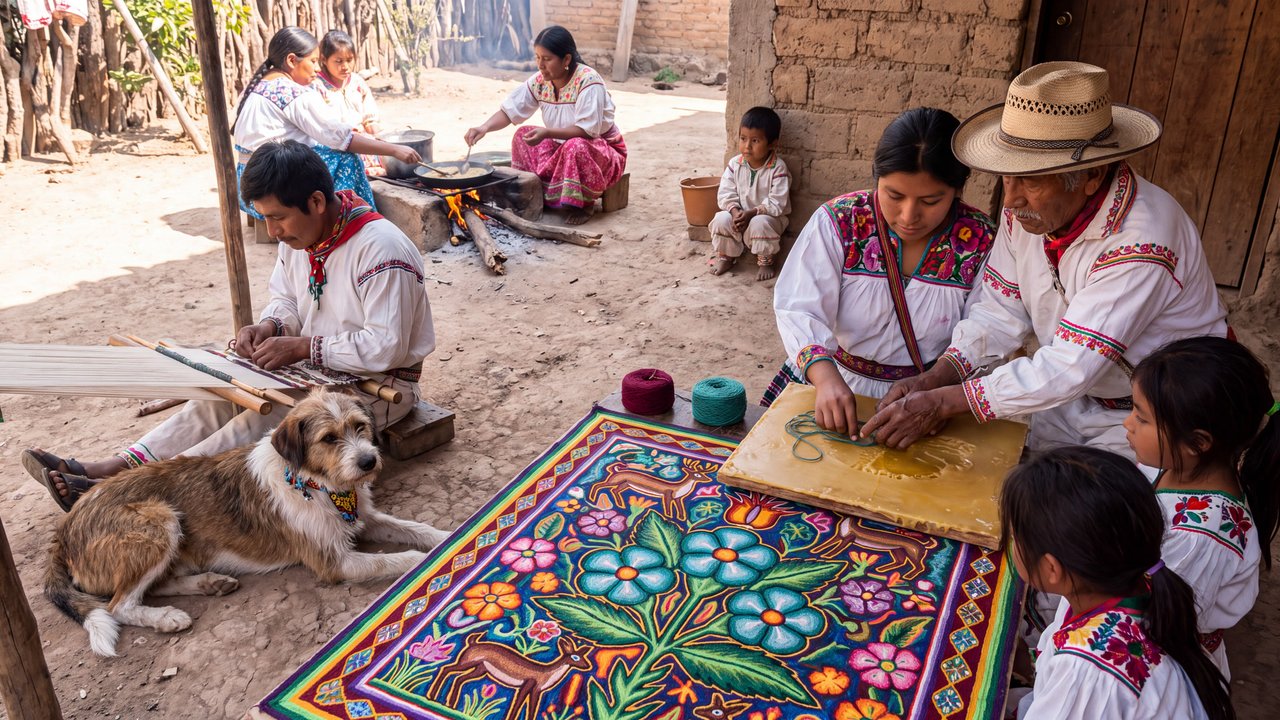
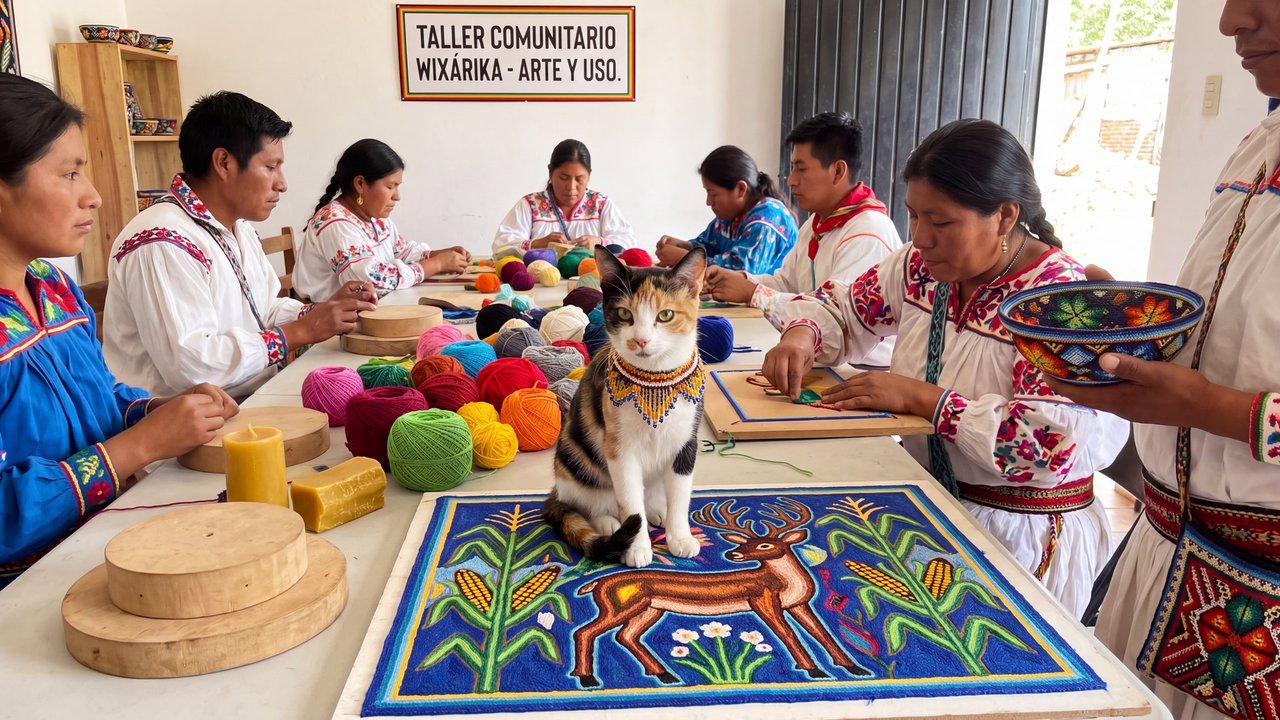
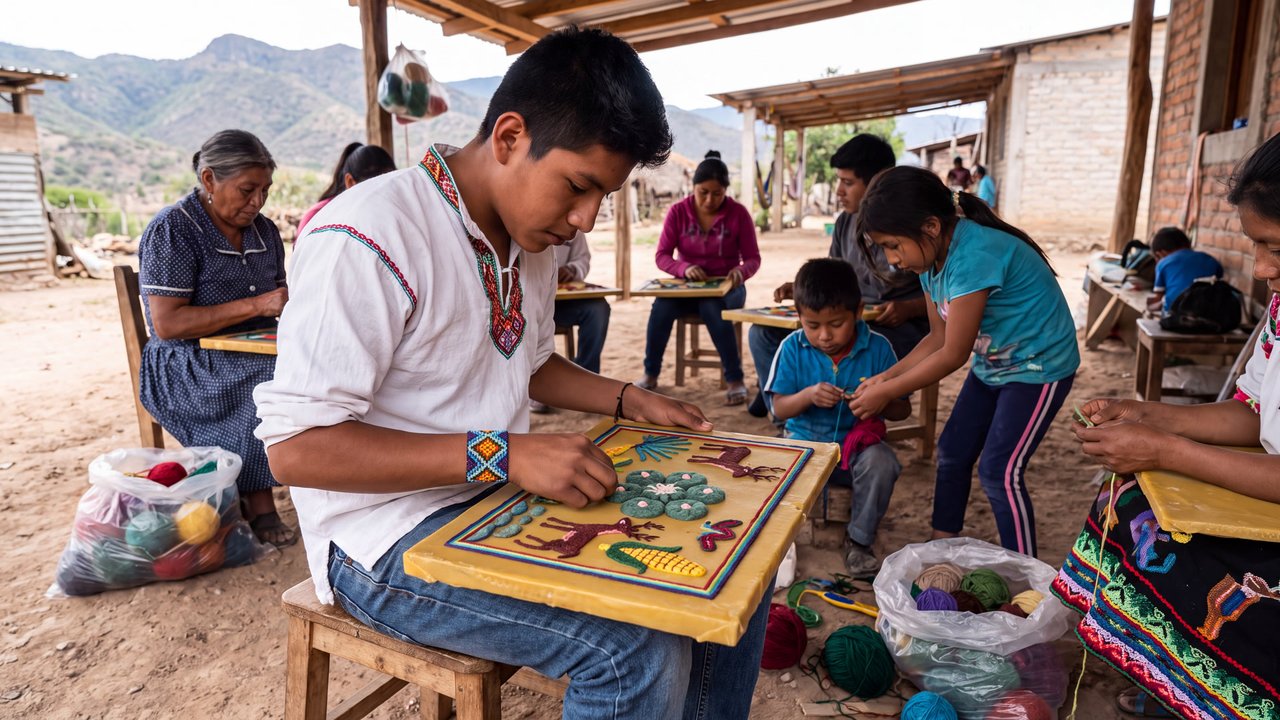
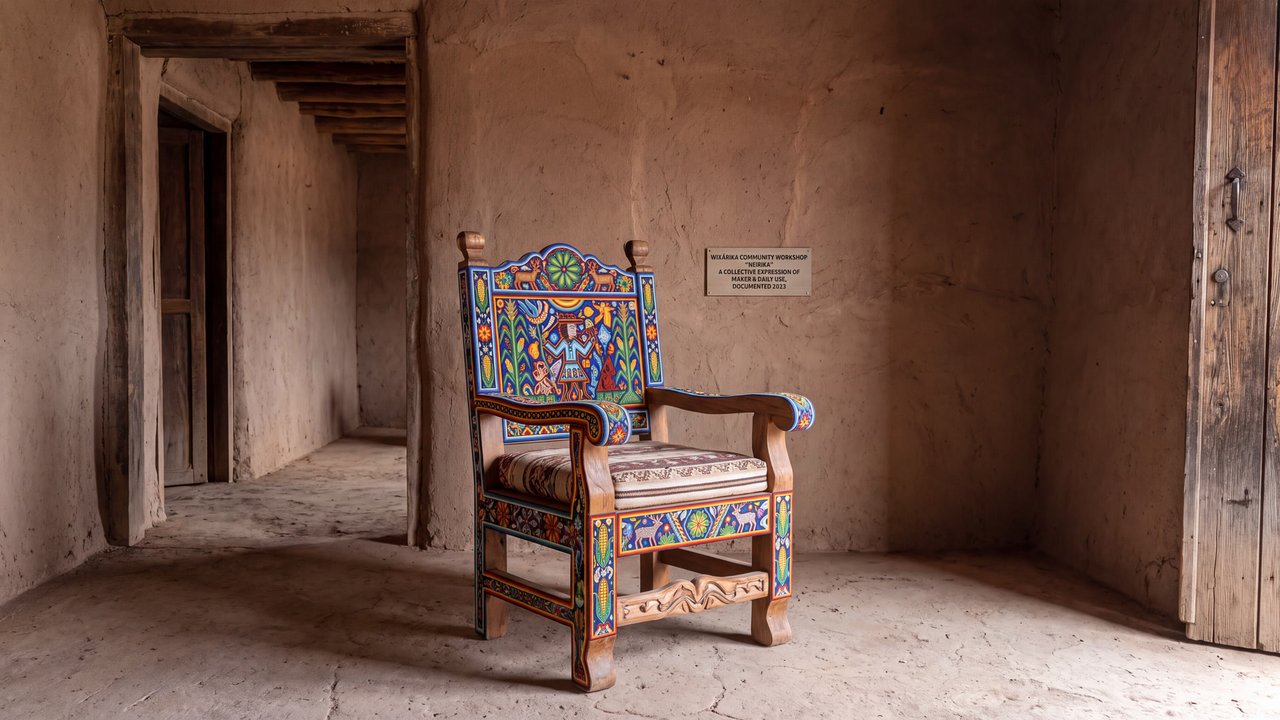
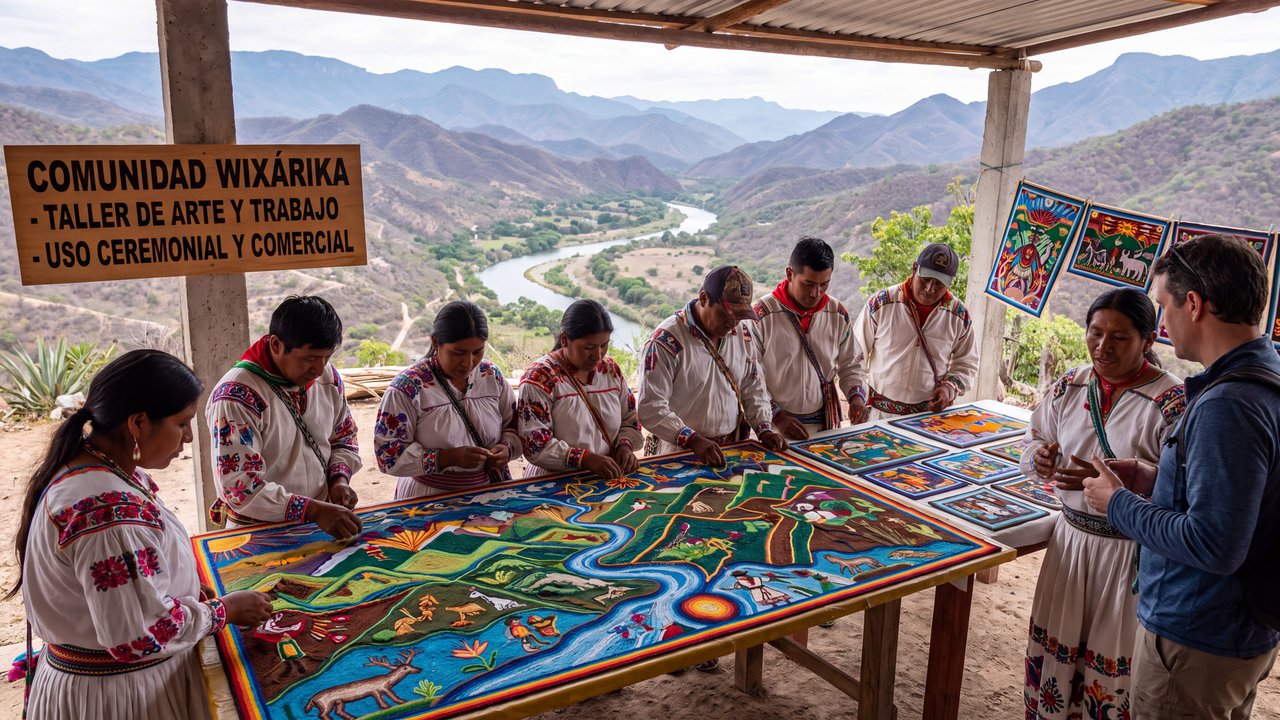
Wixárika visual expression connected to community and contexts of making and use.

Cat
Both languages share the English example images. Japanese prompts are the recorded translations.
Separately specifies verified community work and use contexts without reducing a living culture to generic decoration.
It is handled as visual expression with verified works kept distinct from their making contexts.
Wixárika visual traditions refer to visual expression connected to particular communities, places of making, works, makers, and uses. Do not treat them as a uniform ethnic pattern or decorative style without those particulars.
Address techniques such as Nierika boards and meanings connected with dreams, deities, ancestors, or ceremony only when each work is verified with the relevant community or public sources. Do not infer a community name, work title, maker, place of making, or sacred or ceremonial meaning from appearance.
Adjust community, place, technique, work, maker, use, and public scope from item-specific verification.
Content updated:
Items linked through explicit membership in the same theme.
Cat
Concept
A historical courtly tradition of finely detailed painting.
Compare ↗
Cat
Concept
A historically situated visual-art tradition associated with Ndebele communities.
Compare ↗