




Angry person in a quiet room
Concept
Angry expression
A facial expression in which anger is legible through tension in the brows, eyes, or mouth.
Compare ↗Concept / Upward gaze
A face direction in which eyes and face turn upward with a readable gaze
A gaze in which eyes and face turn upward.

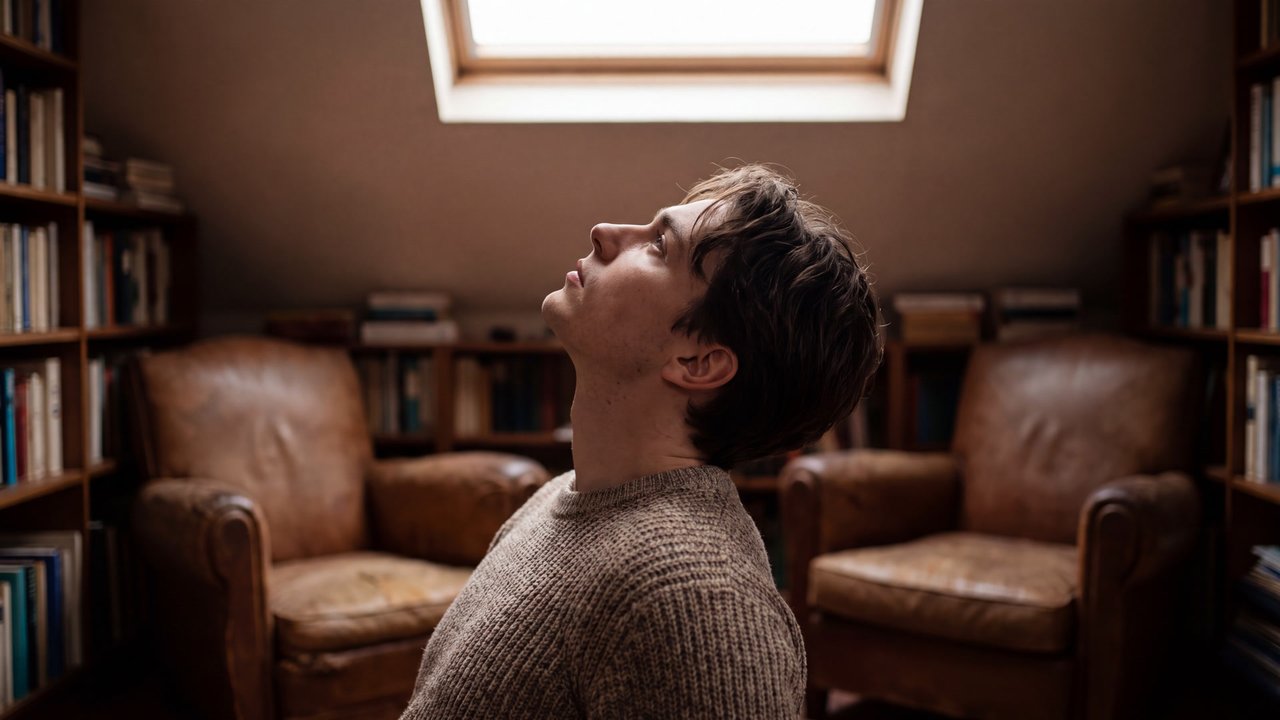
Person looking upward in a quiet room
An unoccupied room cannot show a gaze, so it is replaced with a person.
Both languages share the English example images. Japanese prompts are the recorded translations.
Turns eyes and face upward so the gaze direction is readable.
An upward gaze is readable from the direction of eyes, chin, and neck.
To show a human gaze, it is replaced with an adult.
adult looking upward, chest-up portrait
To show a human gaze, it is replaced with a person.
person looking upward, chest-up portrait
To avoid fixing age, it is replaced with an adult.
adult looking upward, chest-up portrait
An unoccupied room cannot show a gaze, so it is replaced with a person.
person looking upward in a quiet room, chest-up portrait
A subject-free landscape cannot show a gaze, so it is replaced with a person.
person looking upward outdoors, chest-up portrait
Upward gaze is a visible state in which eyes or face turn upward and the direction can be read from the image. It does not determine emotion, personality, reason, object of attention, or religious or cultural meaning.
A view showing eyes, eyelids, chin, and neck direction conveys the gaze. Expression, pose, and scene remain separate choices.
Face rotation and gaze height can be adjusted separately. Keep eyes unobscured.
Content updated:
Items linked through explicit membership in the same theme.
Angry person in a quiet room
Concept
A facial expression in which anger is legible through tension in the brows, eyes, or mouth.
Compare ↗
Arms-crossed person in a quiet room
Concept
A static bodily stance with both arms crossed before the chest.
Compare ↗
Person looking aside in a quiet room
Concept
A gaze directed away to the side rather than toward the frontal focus.
Compare ↗