
Medium-sized dog
Concept
Aerial perspective
A depth treatment that makes distant forms paler, cooler, and less distinct.
Compare ↗Concept / Two-point perspective
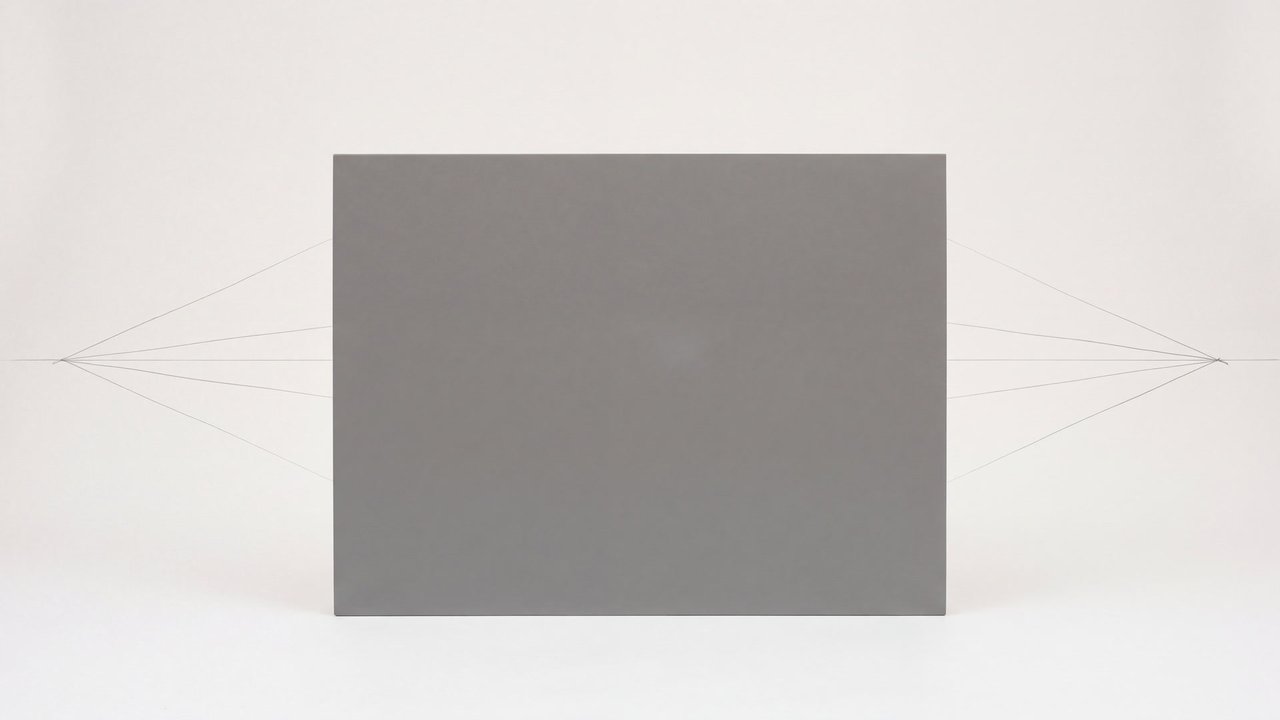
A perspective projection in which horizontal parallel lines converge toward two left-right vanishing points while vertical lines remain approximately vertical
A perspective projection in which horizontal parallel lines converge toward two left-right vanishing points while vertical lines remain approximately vertical.

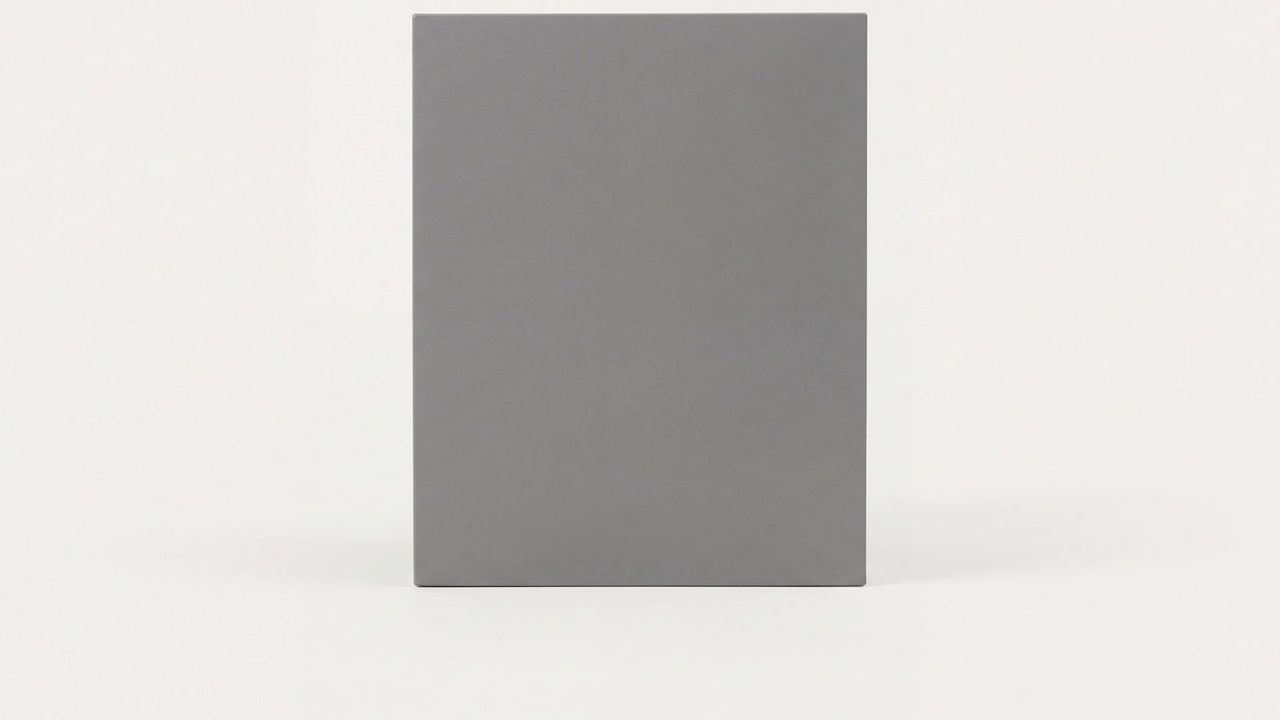
A neutral cube viewed from the front
The standard dog comparison motif alone has no structural lines receding in two directions to compare two-point perspective, so it is replaced with a neutral box that does not pre-stage the projection.
Both languages share the English example images. Japanese prompts are the recorded translations.
Converges horizontal lines in two directions toward left and right vanishing points while keeping vertical lines approximately upright.
Two horizontal sets of lines converge toward separate left and right vanishing points while vertical lines appear approximately upright.
The standard dog comparison motif alone has no structural lines receding in two directions to compare two-point perspective, so it is replaced with a neutral box that does not pre-stage the projection.
a neutral cube with only its front face visible against a plain background, with no receding edges or indicated vanishing points
The standard cat comparison motif alone has no structural lines receding in two directions to compare two-point perspective, so it is replaced with a neutral shape that does not pre-stage the projection.
a neutral rectangle with only its front face visible against a plain background, with no receding edges or indicated vanishing points
The standard boy comparison motif alone has no structural lines receding in two directions to compare two-point perspective, so it is replaced with a neutral panel that does not pre-stage the projection.
a neutral panel with only its front face visible against a plain background, with no receding edges or indicated vanishing points
The standard valley-landscape comparison motif has no structural lines receding in two directions to compare two-point perspective, so it is replaced with a neutral box that does not pre-stage the projection.
a neutral box with only its front face visible against a plain background, with no receding edges or indicated vanishing points
Two-point perspective is a perspective projection in which two horizontal sets of parallel lines converge toward left and right vanishing points while vertical lines remain approximately vertical. It does not determine architecture, camera height, focal length, distortion, angle of view, or a particular subject.
It concerns a spatial appearance in which horizontal lines receding in two directions lead to separate vanishing points while verticals remain upright. It is distinct from one-point perspective, three-point perspective, orthographic projection, and lens distortion.
Vanishing point positions, subject type, viewing height, and angle of view can be adjusted separately.
Content updated:
Items linked through explicit membership in the same theme.
Medium-sized dog
Concept
A depth treatment that makes distant forms paler, cooler, and less distinct.
Compare ↗
Medium-sized dog
Concept
A composition that balances off-center elements through visual weight.
Compare ↗
Medium-sized dog
Concept
A composition that places the main subject on the image's central axis for focus and stability.
Compare ↗