
Angry person in a quiet room
Concept
Angry expression
A facial expression in which anger is legible through tension in the brows, eyes, or mouth.
Compare ↗Concept / Ritual event
An event in which multiple participants follow an established sequence and a repeatable form.
An event in which multiple participants follow an established sequence and a repeatable form.

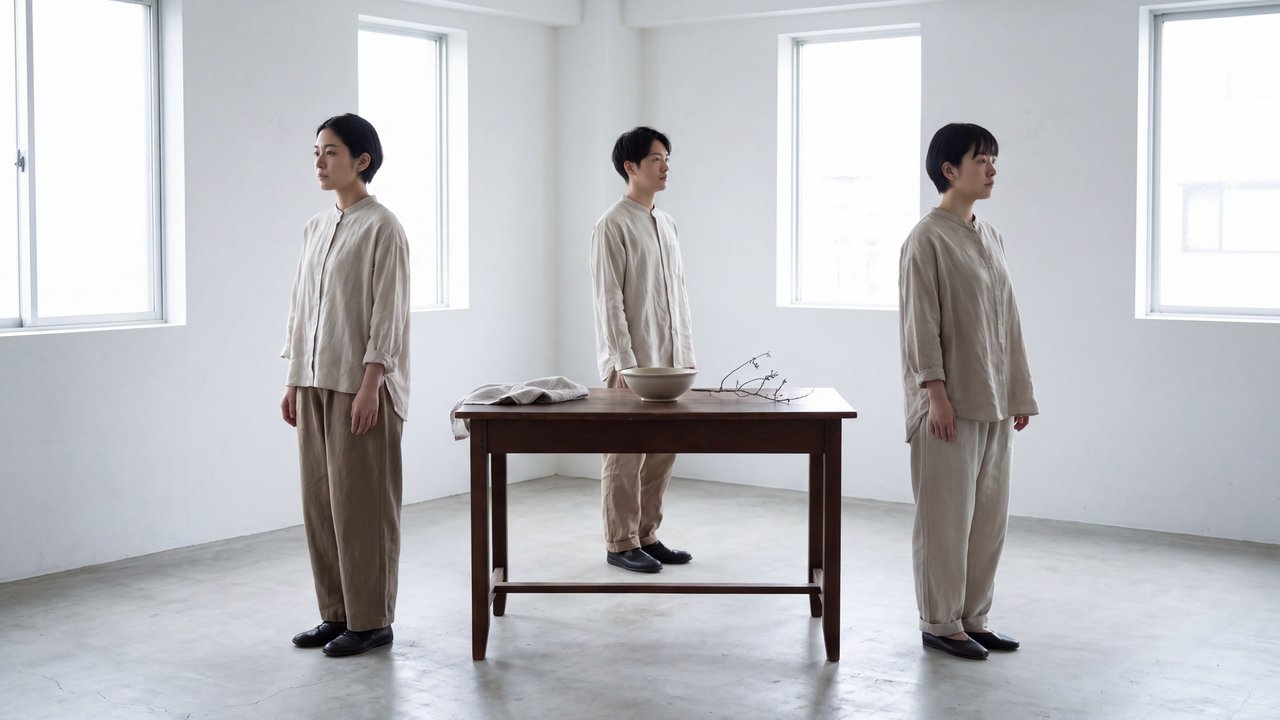
Three people standing apart beside a plain table
An unoccupied quiet room has no possible participants, so it is replaced with three people and a plain table without beginning a ritual, sequence, or shared attention.
Both languages share the English example images. Japanese prompts are the recorded translations.
Directs the image toward a scene in which multiple participants follow an established sequence and a repeatable form.
Multiple participants engage according to a shared sequence and form.
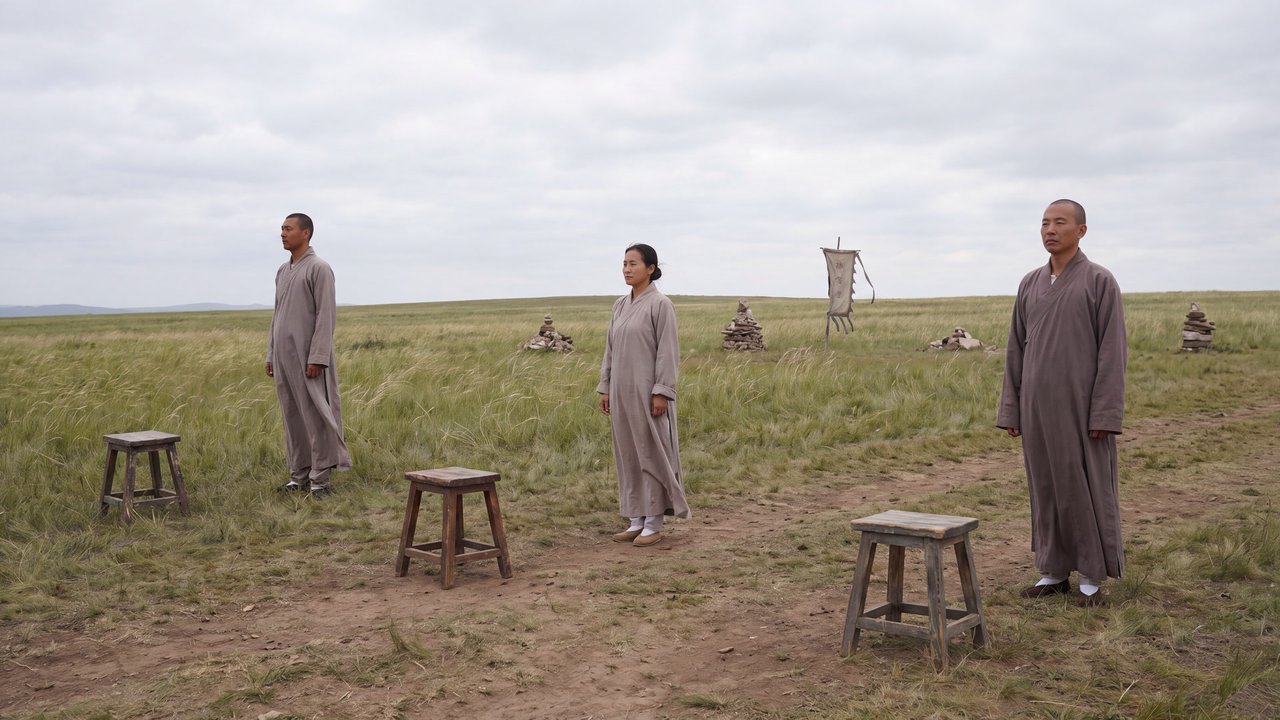
A seated dog alone cannot show multiple possible participants and a neutral space, so it is replaced with three people and plain stools before sequence or shared attention begins.
three people standing apart in an open area beside three plain stools without attending to one another
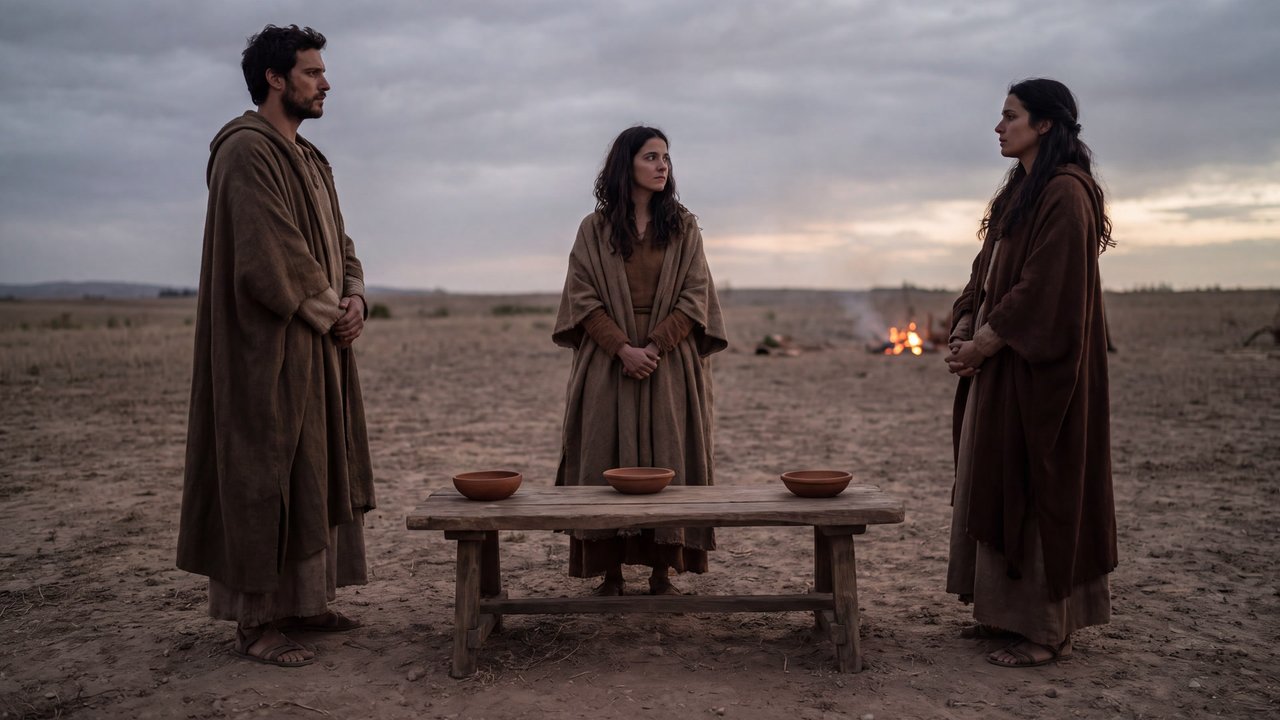
A seated cat alone cannot show multiple possible participants and a neutral object, so it is replaced with three people and empty bowls before sequence or repetition begins.
three people standing apart from empty bowls on a low table without looking at one another
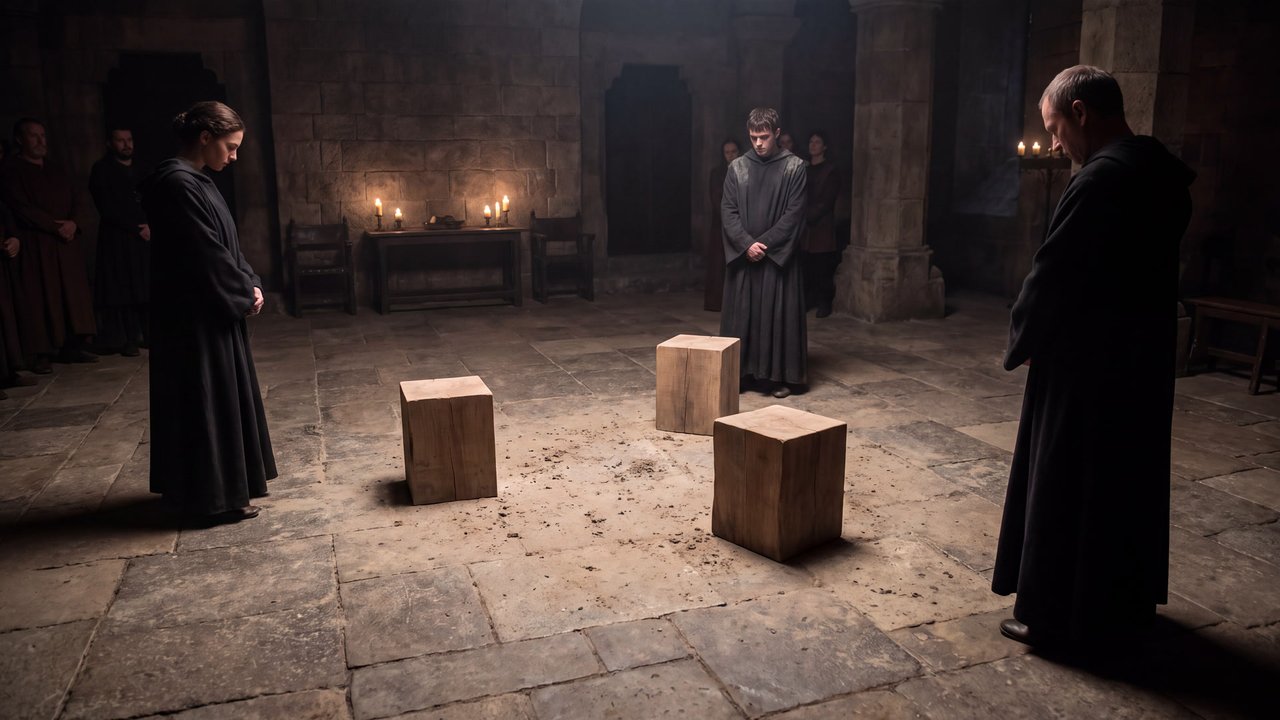
A fixed image of a boy alone cannot show multiple possible participants and a neutral object, so it is replaced with three people and plain blocks before sequence or repetition begins.
three people standing apart from three plain blocks on the floor without shared attention
An unoccupied quiet room has no possible participants, so it is replaced with three people and a plain table without beginning a ritual, sequence, or shared attention.
three people standing apart from a plain table in a bright undecorated room without attending to one another
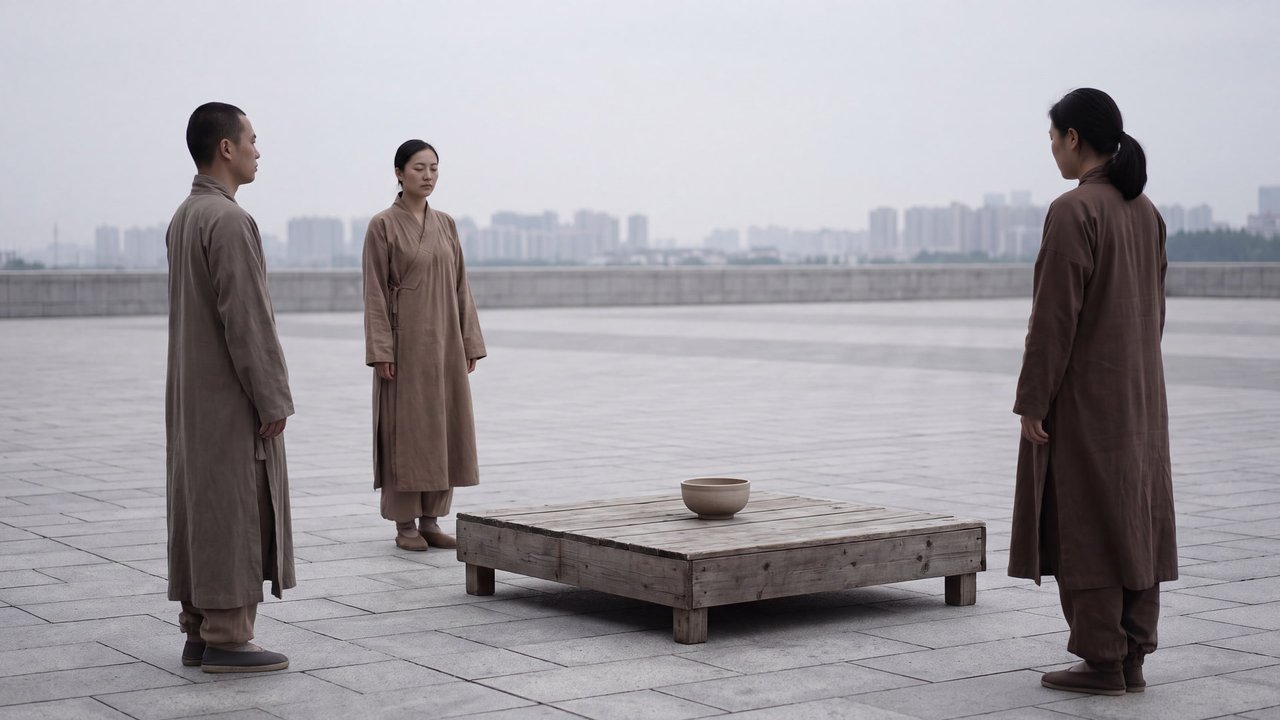
A landscape alone cannot show multiple possible participants and a neutral space, so it is replaced with three people and a plain stand without beginning a ritual, sequence, or repetition.
three people standing apart from a plain low stand in an open plaza with no signs or decorations without looking at one another
A ritual event occurs when multiple participants follow an established sequence and a repeatable form. It does not determine a particular religion, culture, ethnicity, clergy, sacred object or place, clothing, music, symbolic meaning, or public access.
It centers on a shared sequence and repeatable form among participants. It is distinct from a mere gathering, celebration, and an everyday routine. A ritual belonging to a specific living community requires cultural and Authority review before it is used.
The number of participants, action sequence, setting, and objects can be adjusted separately.
Content updated:
Items linked through explicit membership in the same theme.
Angry person in a quiet room
Concept
A facial expression in which anger is legible through tension in the brows, eyes, or mouth.
Compare ↗
Arms-crossed person in a quiet room
Concept
A static bodily stance with both arms crossed before the chest.
Compare ↗
Person looking aside in a quiet room
Concept
A gaze directed away to the side rather than toward the frontal focus.
Compare ↗