


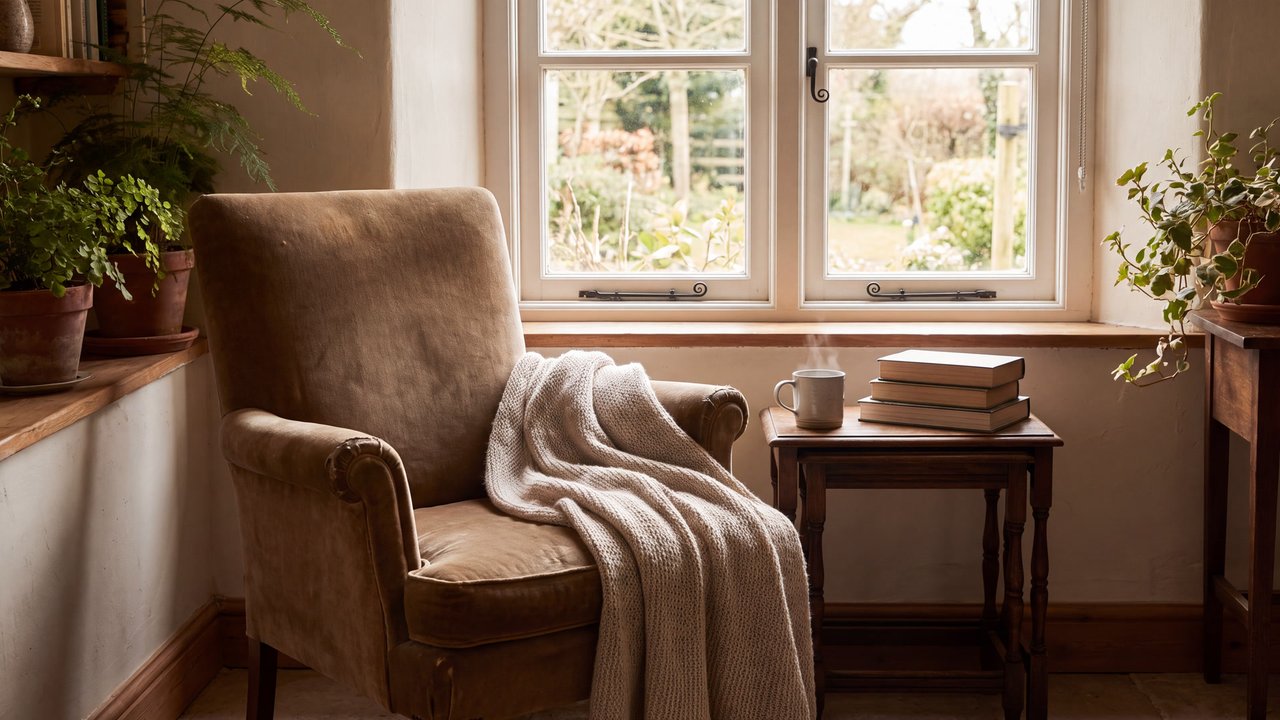


Concept / Intimate mood
Intimate mood
An emotional atmosphere suggesting psychological or spatial closeness and privacy
An emotional atmosphere suggesting psychological or spatial closeness and privacy.

Valley with a river and mountain ranges
Both languages share the English example images. Japanese prompts are the recorded translations.
A phrase to start with
Directs the overall emotional tone of a scene toward safe, nonsexual closeness and privacy.
Appearance and effects
The overall scene reads with a safe, nonsexual emotional tone of closeness and privacy.
Visual traits
- sense of closeness
- private atmosphere
- nonsexual intimacy
Expected changes
- The scene is more likely to read with an emotional tone of closeness and privacy.
Five examples
1 — Medium-sized dog
Open image ↗2 — Cat
Open image ↗3 — Teenage boy
Open image ↗4 — Unoccupied interior
Open image ↗5 — Valley with a river and mountain ranges
Open image ↗Meaning and scope
Definition
Intimate mood is an overall emotional atmosphere suggesting psychological or spatial closeness and privacy. It does not determine romance, a sexual relationship, family, consent, a particular number of people, an interior, darkness, or culture.
In more detail
It concerns the atmosphere of a scene that feels close or private in a safe, nonsexual sense. This mood alone does not infer a relationship between people, contact, romance, sexuality, family ties, or consent. It can be expressed through distance and treatment of a scene with one subject, no people, or an outdoor setting.
Includes
- An emotional atmosphere suggesting psychological or spatial closeness and privacy
Excludes
- Romance, a sexual relationship, family, consent, a particular number of people, an interior, darkness, or culture
- An inference of a relationship or contact between people
What this does not imply
- Romance, a sexual relationship, family, consent, a particular number of people, an interior, darkness, or culture
Variability
Distance, number of subjects, setting, brightness, relationships, and actions can be adjusted separately.
Usage and adjustments
Usage
- Specify only closeness and privacy without adding a relationship or sexual meaning
Distinguish similar expressions
- Specify relationships between people, contact, romance, sexuality, family, or setting separately only when needed
Typical uses
- Give scenes containing people, animals, unoccupied spaces, or landscapes a safe nonsexual mood of closeness and privacy
Possible failure modes
- The result becomes fixed as romantic or sexual
- Family or consent is inferred without support
- An interior or darkness is added as a required element
Content updated:
From the same theme
Items linked through explicit membership in the same theme.


A neutral stone against a plain background
Concept
Celebration theme
A narrative theme centered on sharing joy or an achievement through celebration.
Compare ↗