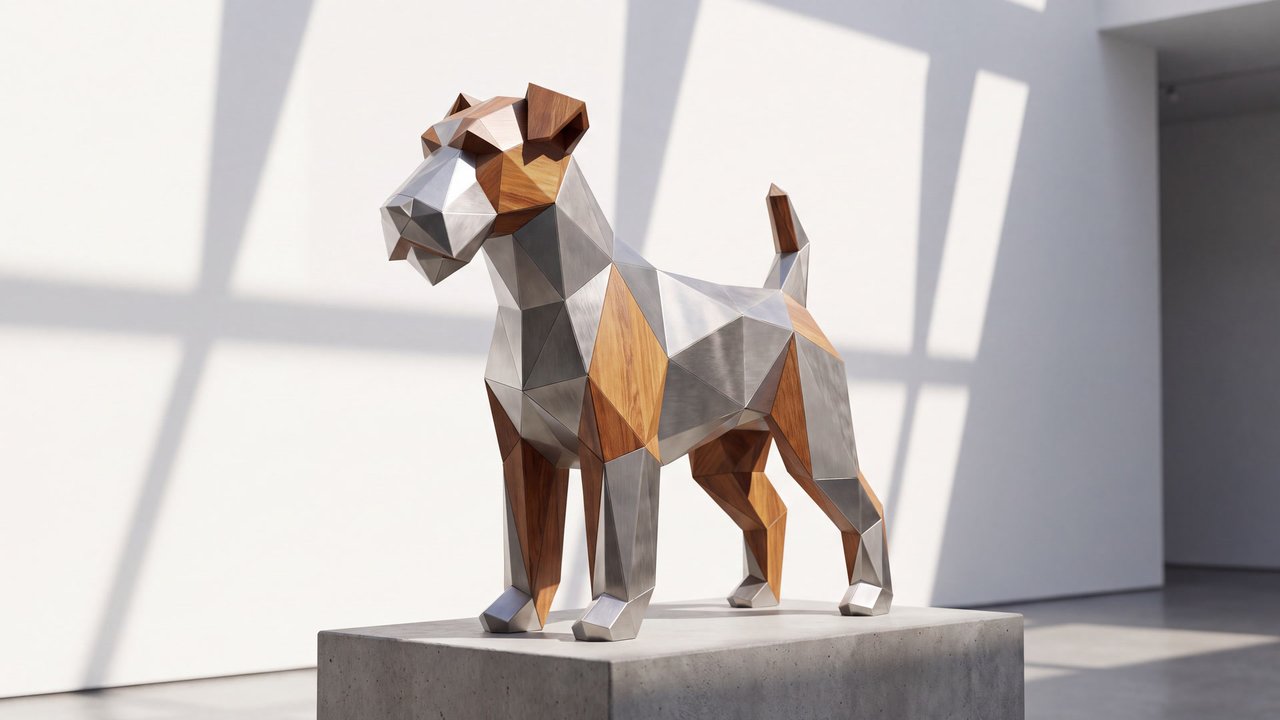



Medium-sized dog
Concept
Aerial perspective
A depth treatment that makes distant forms paler, cooler, and less distinct.
Compare ↗Concept / Geometric form language
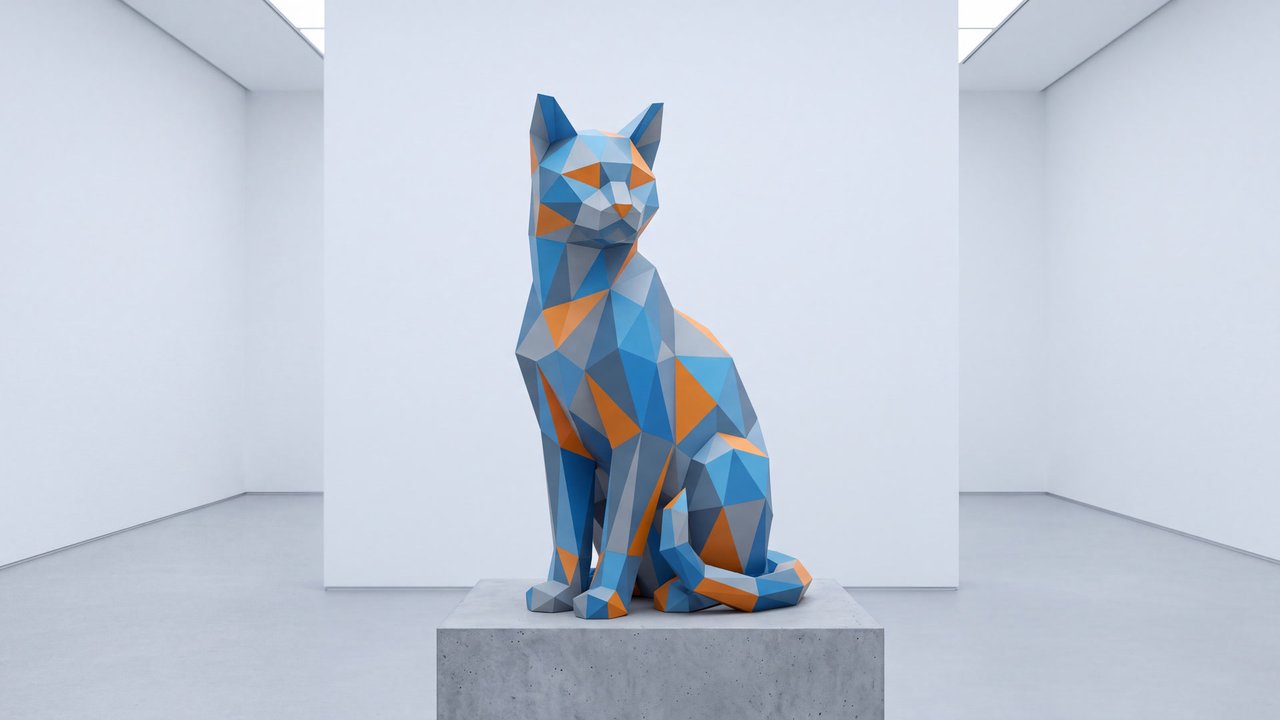
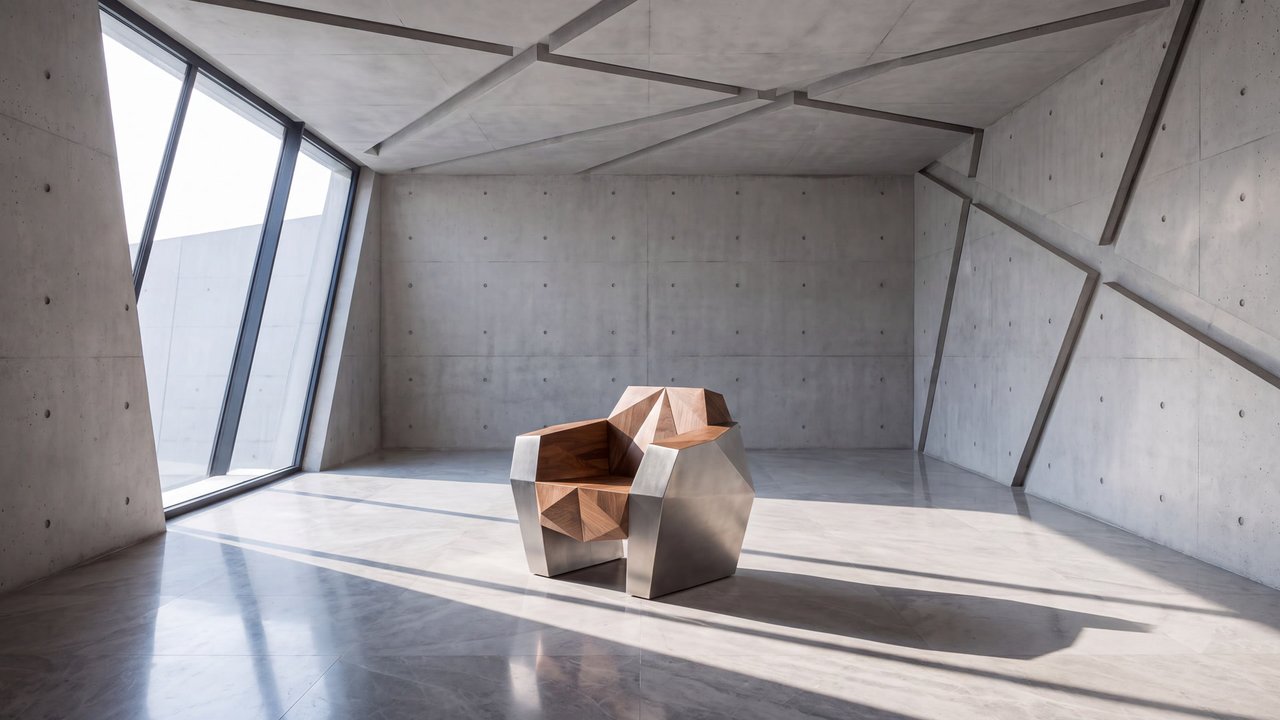
Form built chiefly from regular shapes such as circles, straight lines, and polygons
Form built chiefly from regular shapes.

Cat
Both languages share the English example images. Japanese prompts are the recorded translations.
Specifies an appearance based on regular geometric shapes.
Straight lines, corners, and regular curves organize the form.
Builds form by combining regular shapes such as circles, straight lines, and polygons. Representational level, subject, medium, and composition are separate choices.
Edges, corners, repetition, and symmetry create the form's order. Color and amount of detail can be adjusted separately.
Regularity can range from strict symmetry to loose repetition.
Content updated:
Items linked through explicit membership in the same theme.
Medium-sized dog
Concept
A depth treatment that makes distant forms paler, cooler, and less distinct.
Compare ↗
Medium-sized dog
Concept
A composition that balances off-center elements through visual weight.
Compare ↗
Medium-sized dog
Concept
A composition that places the main subject on the image's central axis for focus and stability.
Compare ↗