




Angry person in a quiet room
Concept
Angry expression
A facial expression in which anger is legible through tension in the brows, eyes, or mouth.
Compare ↗Concept / Front-behind placement
A relative arrangement in which one subject is placed in front of or behind another
A relative arrangement in which one subject is placed in front of or behind another.

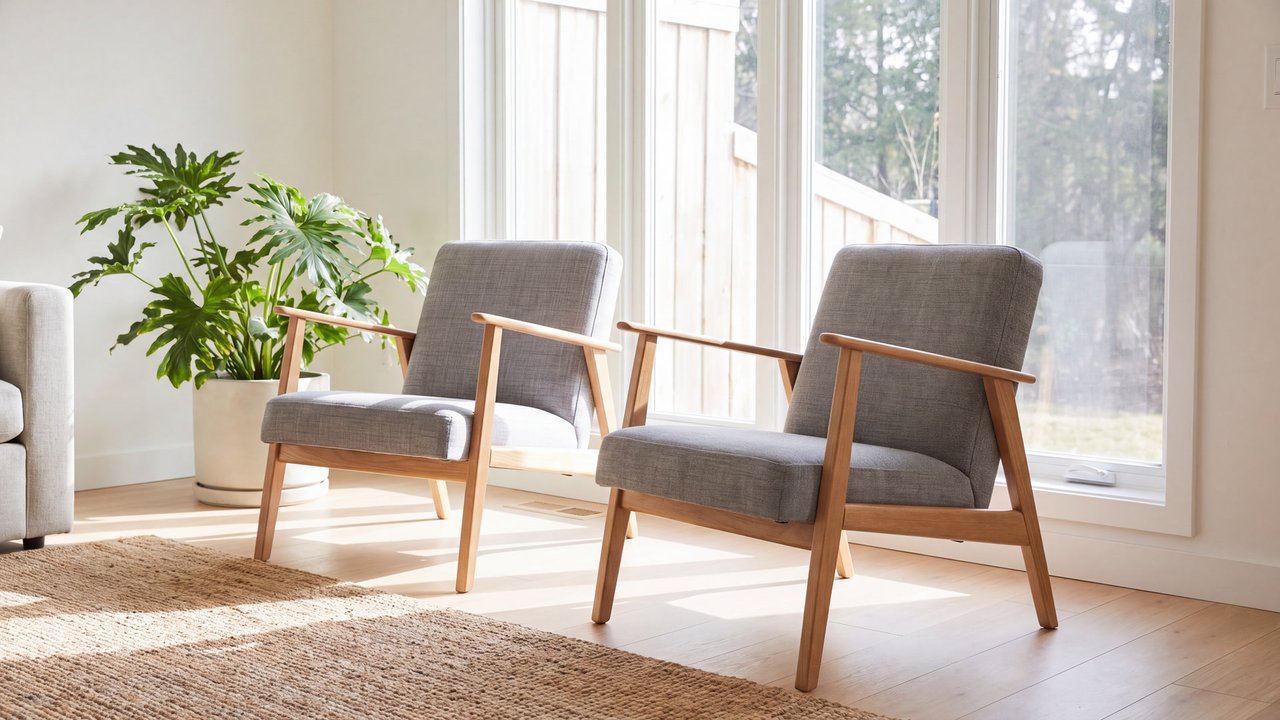
Two chairs side by side
An empty room alone cannot compare a front-behind relation between two subjects, so it is replaced with two side-by-side chairs that do not pre-establish depth order.
Both languages share the English example images. Japanese prompts are the recorded translations.
Directs the image toward an arrangement with legible front-behind depth order.
One subject visibly overlaps another in front-behind order.
The standard comparison motif cannot compare front-behind placement neutrally, so it is replaced with an arrangement that does not pre-establish depth order.
two people standing apart in an open area without looking at one another
The standard comparison motif cannot compare front-behind placement neutrally, so it is replaced with an arrangement that does not pre-establish depth order.
two identical boxes placed side by side with space between them on a flat floor
The standard comparison motif cannot compare front-behind placement neutrally, so it is replaced with an arrangement that does not pre-establish depth order.
two people standing side by side facing the same direction in an open area
An empty room alone cannot compare a front-behind relation between two subjects, so it is replaced with two side-by-side chairs that do not pre-establish depth order.
two chairs facing the same direction and placed side by side with space between them in a bright room
One stone cannot compare a front-behind relation between two subjects, so it is replaced with two side-by-side stones that do not pre-establish depth order.
two equal-sized stones placed side by side with space between them on level ground
Front-behind placement is a spatial relationship that establishes depth order among two or more subjects. It does not determine left-right order, above-below order, mere distance, or narrative priority.
It centers on overlap, occlusion, and depth order between subjects. It is distinct from size alone and from general perspective.
Subjects, distance, and degree of overlap can be adjusted separately.
Content updated:
Items linked through explicit membership in the same theme.
Angry person in a quiet room
Concept
A facial expression in which anger is legible through tension in the brows, eyes, or mouth.
Compare ↗
Arms-crossed person in a quiet room
Concept
A static bodily stance with both arms crossed before the chest.
Compare ↗
Person looking aside in a quiet room
Concept
A gaze directed away to the side rather than toward the frontal focus.
Compare ↗