


Concept / Family theme
Family theme
An inclusive narrative theme concerning the relationships and lives of people connected as family
An inclusive narrative theme concerning the relationships and lives of people connected as family.

A neutral stone against a plain background
The fixed landscape can read as a backdrop for family life, so it is replaced with a neutral object that does not pre-stage a family relationship.
Both languages share the English example images. Japanese prompts are the recorded translations.
A phrase to start with
Directs the scene toward a narrative theme of the relationships and lives of people connected as family.
Appearance and effects
The relationships and lives of people connected as family can read as the narrative focus.
Visual traits
- family connection
- relational focus
- life-centered narrative quality
Expected changes
- Family connection is more likely to read as the narrative focus
Five examples
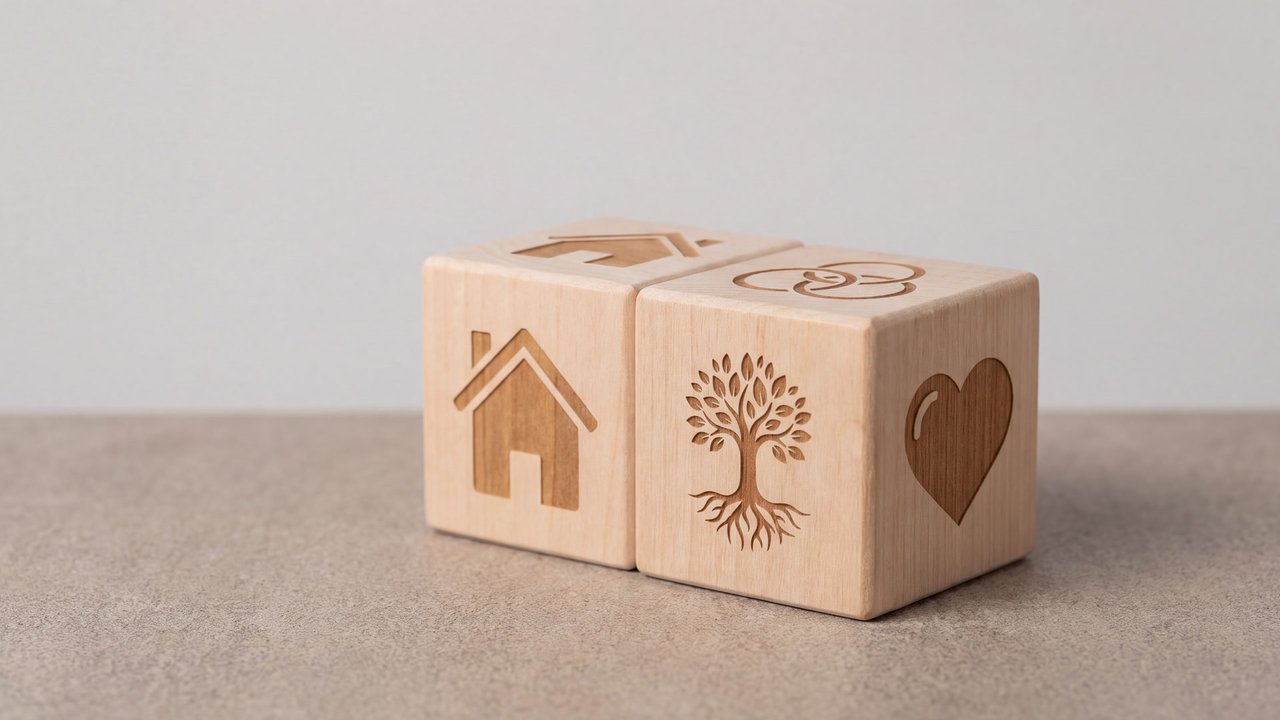
1 — A neutral cube against a plain background
The fixed dog can read as a family member, so it is replaced with a neutral object that does not pre-stage a family relationship.
A single cube against a plain background with no cues to people, relationships, lived setting, emotion, or culture.
- A single cube against a plain background.
- A state with no relational cue.
2 — A neutral sphere against a plain background
The fixed cat can read as a family member, so it is replaced with a neutral object that does not pre-stage a family relationship.
A single sphere against a plain background with no cues to people, relationships, lived setting, emotion, or culture.
- A single sphere against a plain background.
- A state with no relational cue.
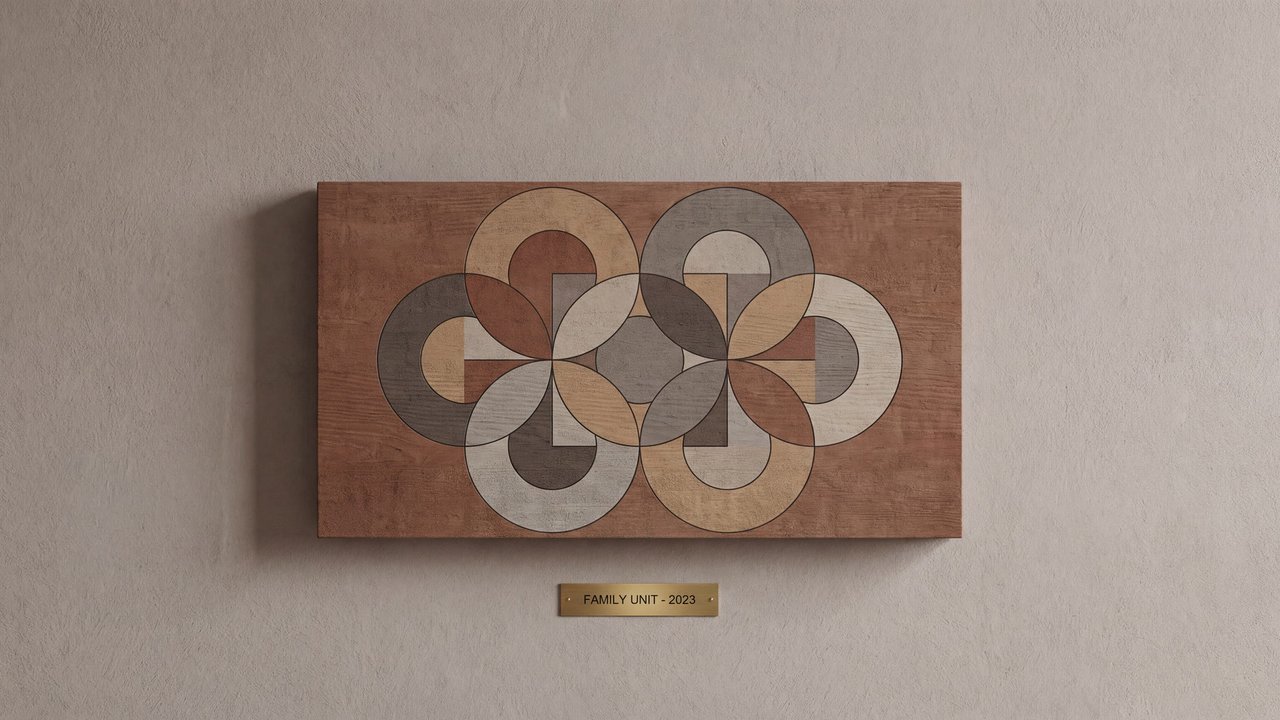
3 — A neutral rectangular panel against a plain background
The fixed boy is a human subject that can suggest family connection, so it is replaced with a neutral object that does not pre-stage family.
A rectangular panel against a plain background with no cues to people, relationships, lived setting, emotion, or culture.
- A rectangular panel against a plain background.
- A state with no relational cue.
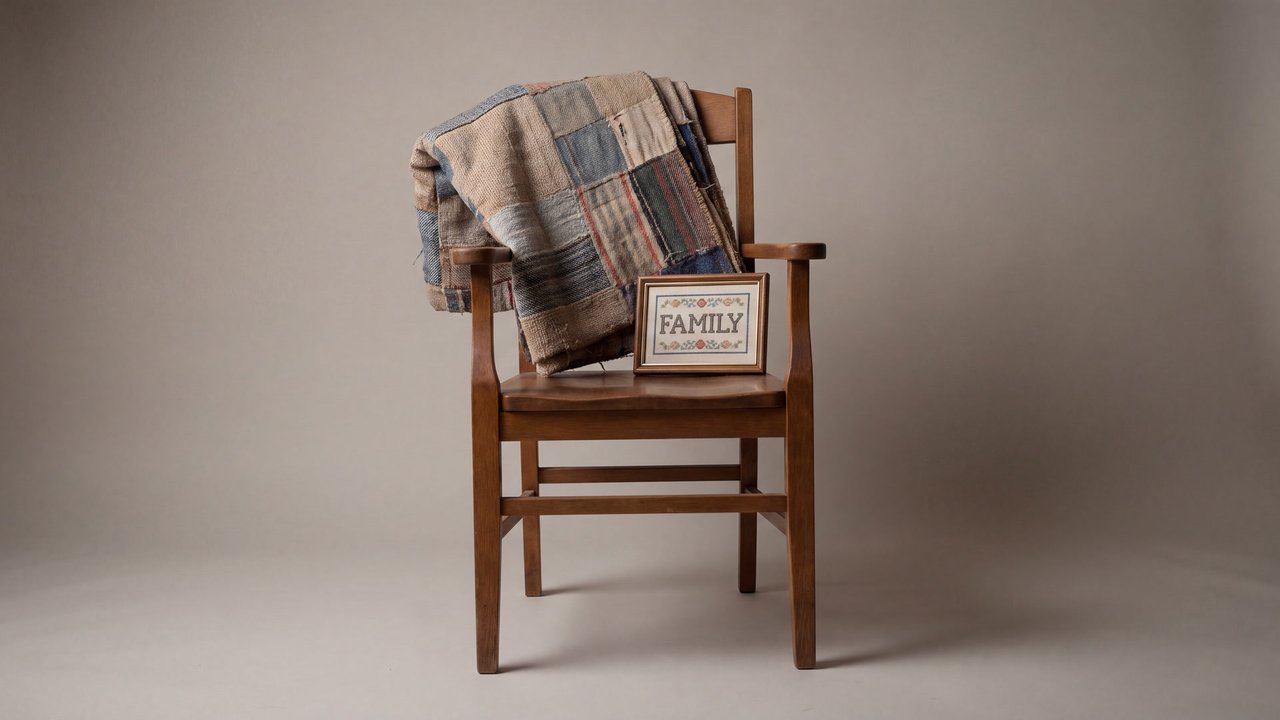
4 — A neutral chair against a plain background
The standard unoccupied-interior comparison motif is an unoccupied interior that can pre-stage a setting for family life, so it is replaced with a neutral object that gives no family cue.
A single chair against a plain background with no cues to people, relationships, lived setting, emotion, or culture.
- A single chair against a plain background.
- A state with no relational cue.
5 — A neutral stone against a plain background
The fixed landscape can read as a backdrop for family life, so it is replaced with a neutral object that does not pre-stage a family relationship.
A single stone against a plain background with no cues to people, relationships, lived setting, emotion, or culture.
- A single stone against a plain background.
- A state with no relational cue.
Meaning and scope
Definition
Family theme is a narrative theme concerning the relationships and lives of people connected as family. It does not determine biological relation, marriage, co-residence, number of people, gender roles, culture, harmony or conflict, or a particular family form.
In more detail
It concerns scenes in which family connection is a narrative focus. It does not limit family to biological relation, marriage, or a shared residence, and the theme alone does not infer how a family is constituted. It does not automatically supply an idealized or conflicted family image, while roles, number of people, and cultural practices remain separately specifiable.
Includes
- A narrative theme concerning the relationships and lives of people connected as family
Excludes
- Biological relation, marriage, co-residence, number of people, gender roles, culture, harmony or conflict, or a particular family form
- An inference about the relationships that constitute a family
What this does not imply
- Biological relation, marriage, co-residence, number of people, gender roles, culture, harmony or conflict, or a particular family form
Variability
People, how relationships are shown, number of people, location, emotion, and cultural context can be adjusted separately.
Usage and adjustments
Usage
- Use it as a theme of relationships and lives connected as family without automatically fixing a family form or roles
Distinguish similar expressions
- Specify relationship structure, number of people, emotion, and cultural context separately only when needed
Typical uses
- Give scenes containing people, objects, spaces, or landscapes a narrative theme of family connection
Possible failure modes
- Biological relation or marriage is added as a requirement
- The result is limited to fixed gender roles or one family form
- Harmony or conflict is added automatically
Content updated:
From the same theme
Items linked through explicit membership in the same theme.


A neutral stone against a plain background
Concept
Celebration theme
A narrative theme centered on sharing joy or an achievement through celebration.
Compare ↗