Concept / Food
Food
An object category depicting a solid or semi-solid item intended for eating
An object category depicting a solid or semi-solid item intended for eating.

An empty plain plate on a table
A fixed image of a boy has no edible solid or semi-solid item to compare with the category, so it is replaced with an empty neutral plate that does not pre-stage food.
Both languages share the English example images. Japanese prompts are the recorded translations.
A phrase to start with
Adds an edible solid or semi-solid item to the scene.
Appearance and effects
A solid or semi-solid item intended for eating appears as an object in the scene.
Visual traits
- edible solid or semi-solid item
- object distinct from a beverage
- unspecified dish or taste
Expected changes
- An edible solid or semi-solid item is more likely to appear.
- The object is less likely to read as a drinkable liquid.
Five examples
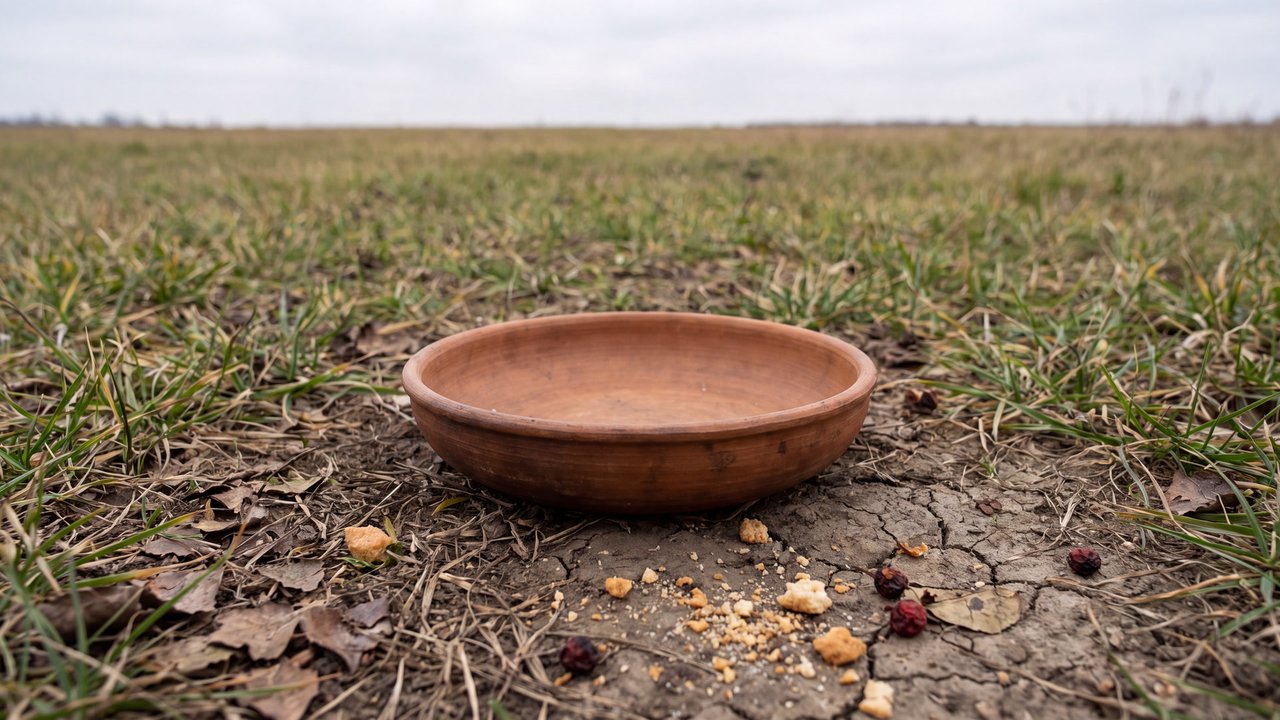
1 — An empty unmarked bowl on the ground
A seated dog has no edible solid or semi-solid item to compare with the category, so it is replaced with an empty neutral bowl that does not pre-stage food.
an unmarked empty shallow bowl placed on the ground in an open area
- an unmarked empty shallow bowl
- ground in an open area
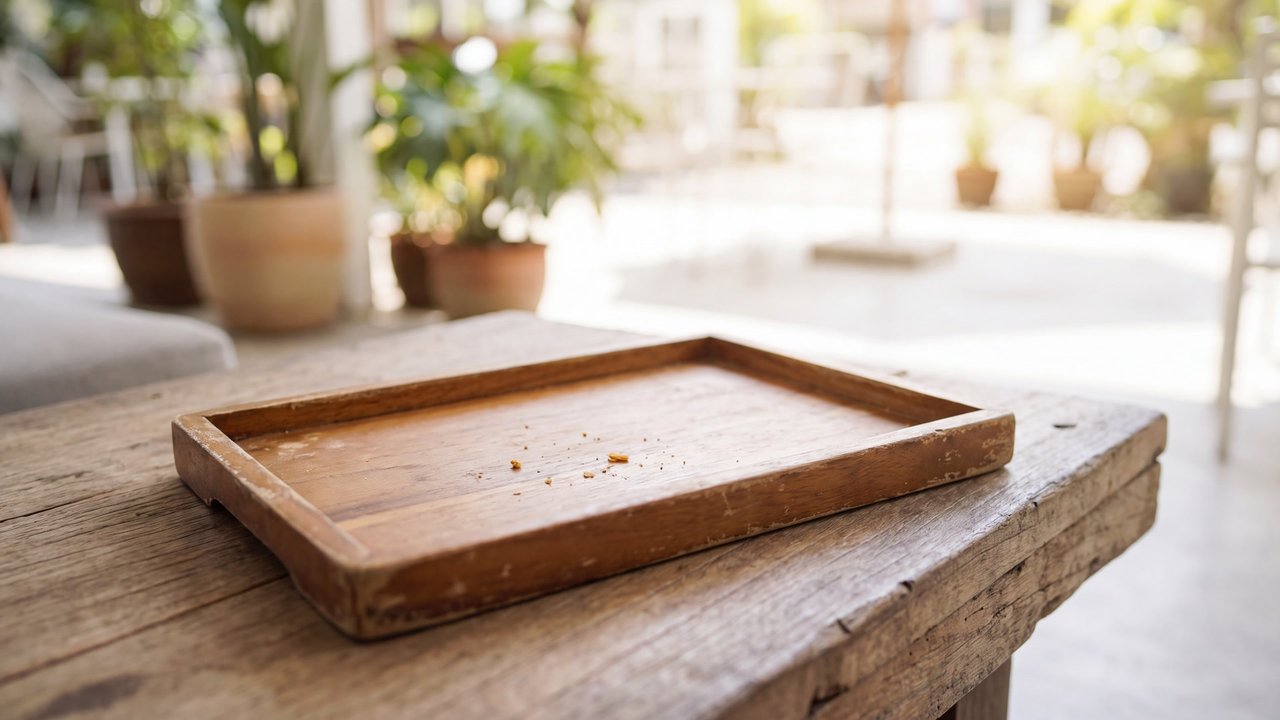
2 — An empty plain tray on a surface
A seated cat has no edible solid or semi-solid item to compare with the category, so it is replaced with an empty neutral tray that does not pre-stage food.
an empty plain flat tray placed on a low surface in a bright setting
- an empty plain flat tray
- a low surface in a bright setting
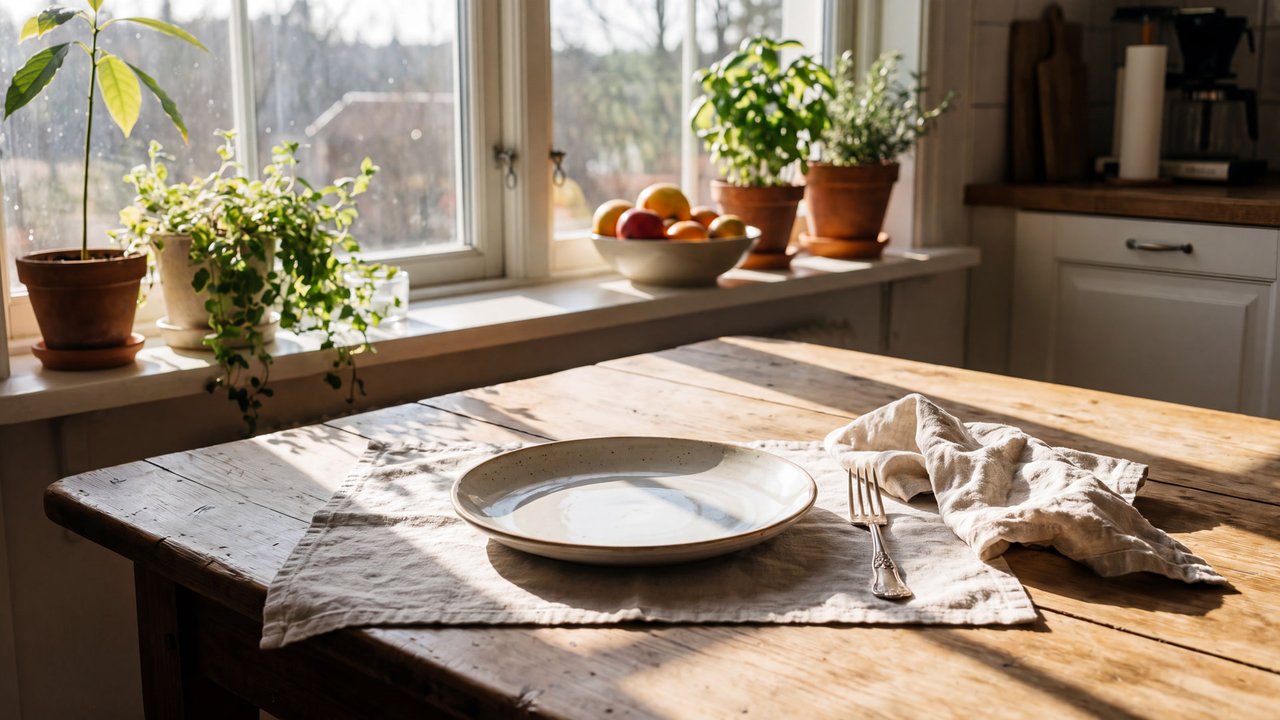
3 — An empty plain plate on a table
A fixed image of a boy has no edible solid or semi-solid item to compare with the category, so it is replaced with an empty neutral plate that does not pre-stage food.
an empty plain plate placed on a table in a bright room
- an empty plain plate
- a table in a bright room
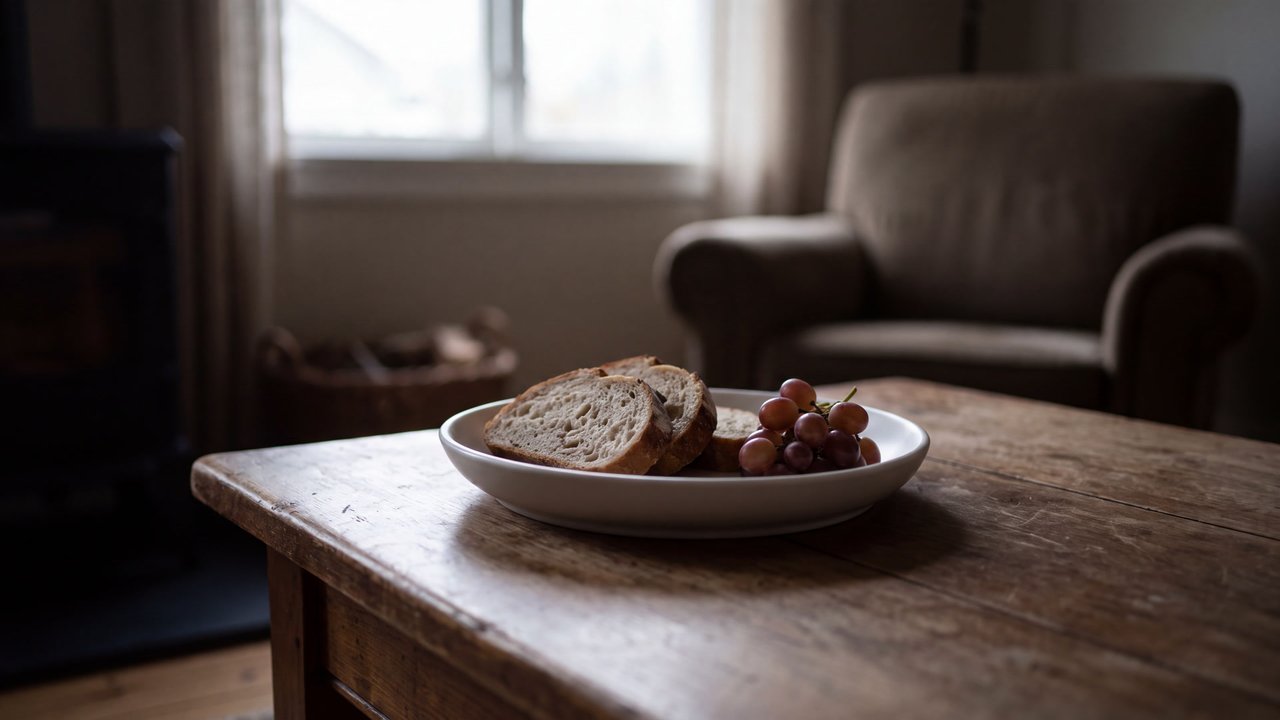
4 — An empty shallow dish in a quiet room
An unoccupied quiet scene has no edible solid or semi-solid item to compare with the category, so it is replaced with a scene containing an empty neutral dish that does not pre-stage food.
an unmarked empty shallow dish placed on a low surface in a quiet room
- an unmarked empty shallow dish
- a low surface in a quiet room
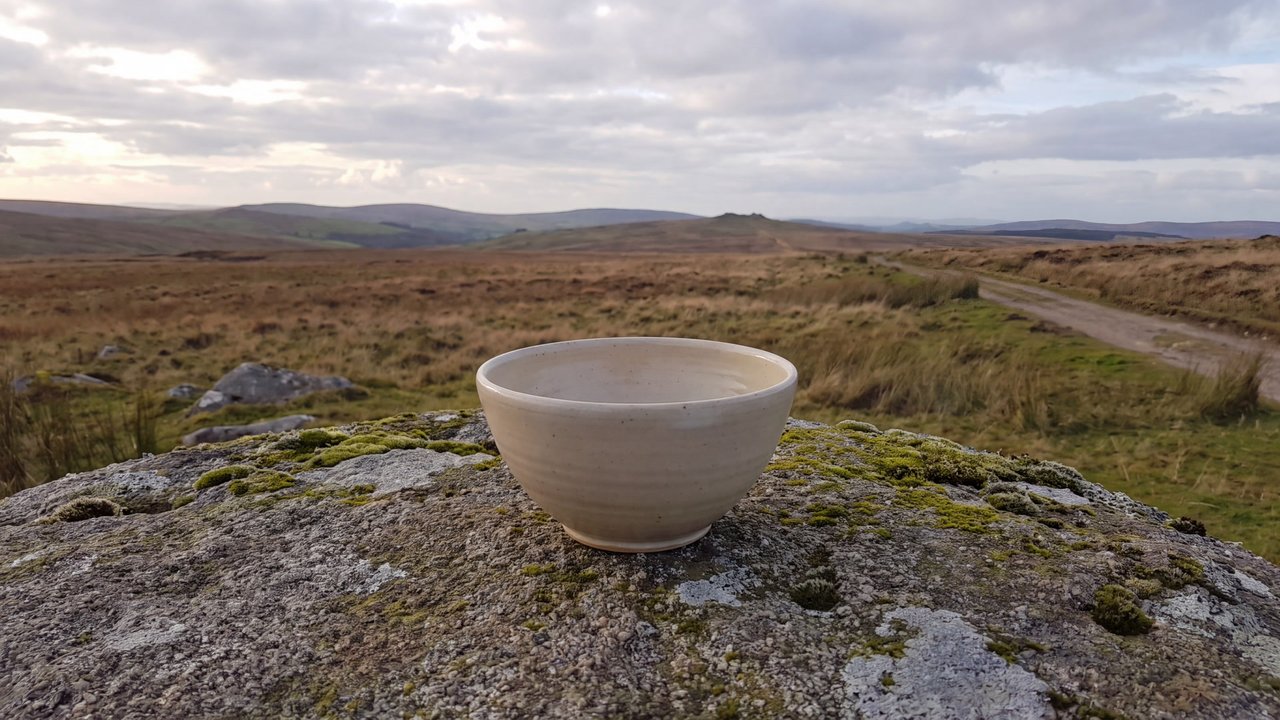
5 — An empty plain dish in an open landscape
A landscape alone has no edible solid or semi-solid item to compare with the category, so it is replaced with a scene containing an empty neutral dish that does not pre-stage food.
an unmarked empty dish placed on a level stone in an open landscape
- an unmarked empty dish
- a level stone in an open landscape
Meaning and scope
Definition
Food is an object category for a solid or semi-solid item intended for eating. It does not determine a dish name, culture, nutrition, health, taste, an eating action, or a container. A liquid intended for drinking is treated separately as a beverage.
In more detail
It concerns an object in a scene being an edible solid or semi-solid item. It is distinct from a drinkable liquid, a particular dish, food culture, nutritional properties, a person eating, and tableware.
Includes
- An object intended for eating that is solid or semi-solid.
Excludes
- A liquid intended for drinking.
- A dish name.
- Culture.
- Nutrition or health.
- Taste.
- The action of eating.
- A container.
What this does not imply
- A dish name.
- A culture.
- Nutrition.
- A health effect.
- Taste.
- The action of eating.
- A container.
Variability
Food type, amount, shape, and placement can be adjusted separately.
Usage and adjustments
Usage
- Specify only an object category for an edible solid or semi-solid item.
Distinguish similar expressions
- Specify dish name, culture, taste, nutrition, eating action, or container separately only when needed.
Typical uses
- Specify an edible solid or semi-solid item in a scene.
Possible failure modes
- It reads as a beverage.
- A particular dish or culture is added automatically.
- An eating action or health effect becomes fixed.
Content updated:
From the same theme
Items linked through explicit membership in the same theme.